
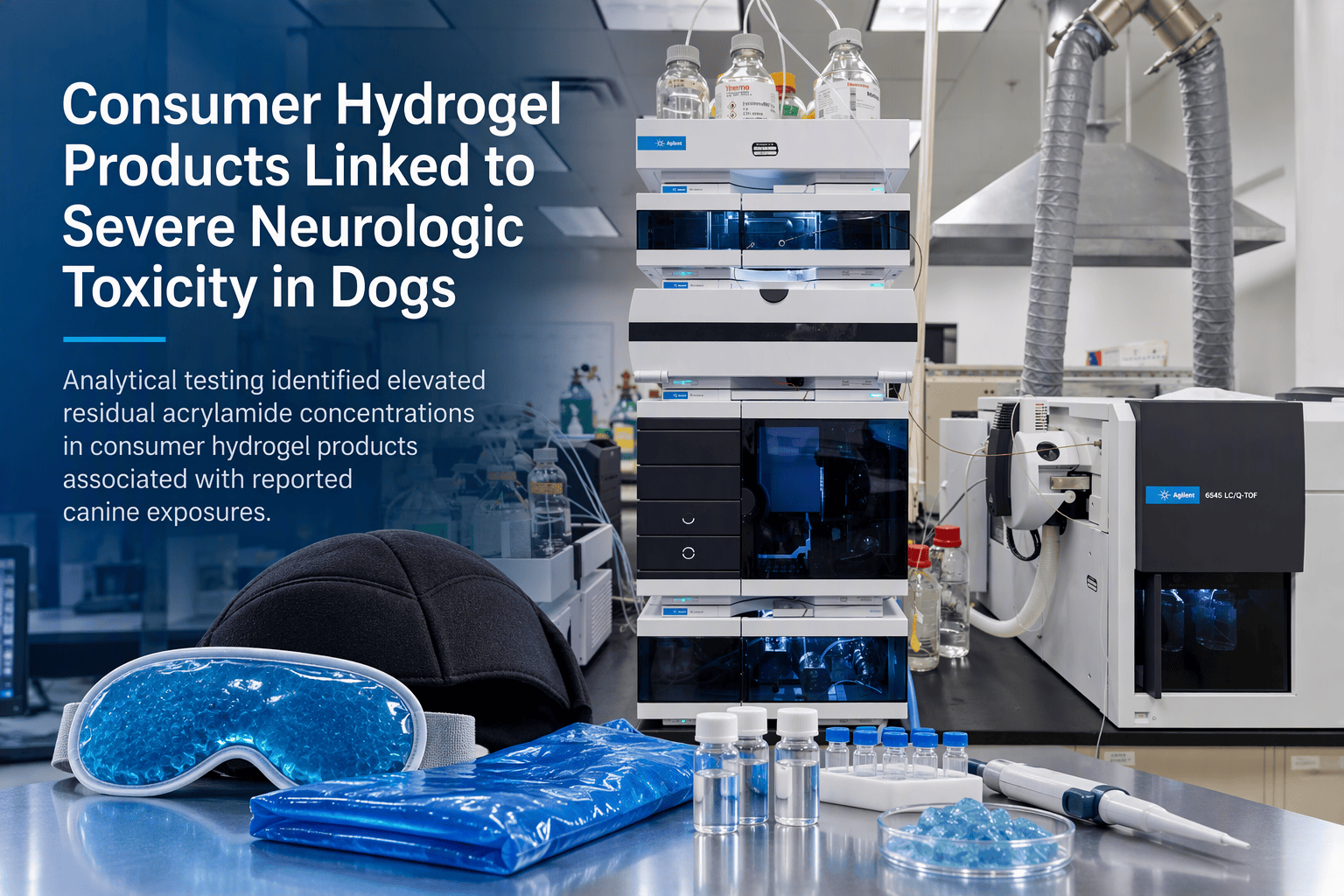
 Analytical testing identified elevated residual acrylamide concentrations in consumer hydrogel products associated with reported canine neurologic toxicity cases.
Consumer Hydrogel Products Linked to Severe Neurologic Toxicity in Dogs
Many polymer-based hydrogel products are designed to improve comfort and quality of life. From cooling pads to migraine relief caps, these products rely on water-containing polymer networks that can retain moisture and provide extended cooling performance. Unfortunately, recent veterinary toxicology investigations suggest that some hydrogel products may contain unexpectedly high concentrations of a known neurotoxic […]
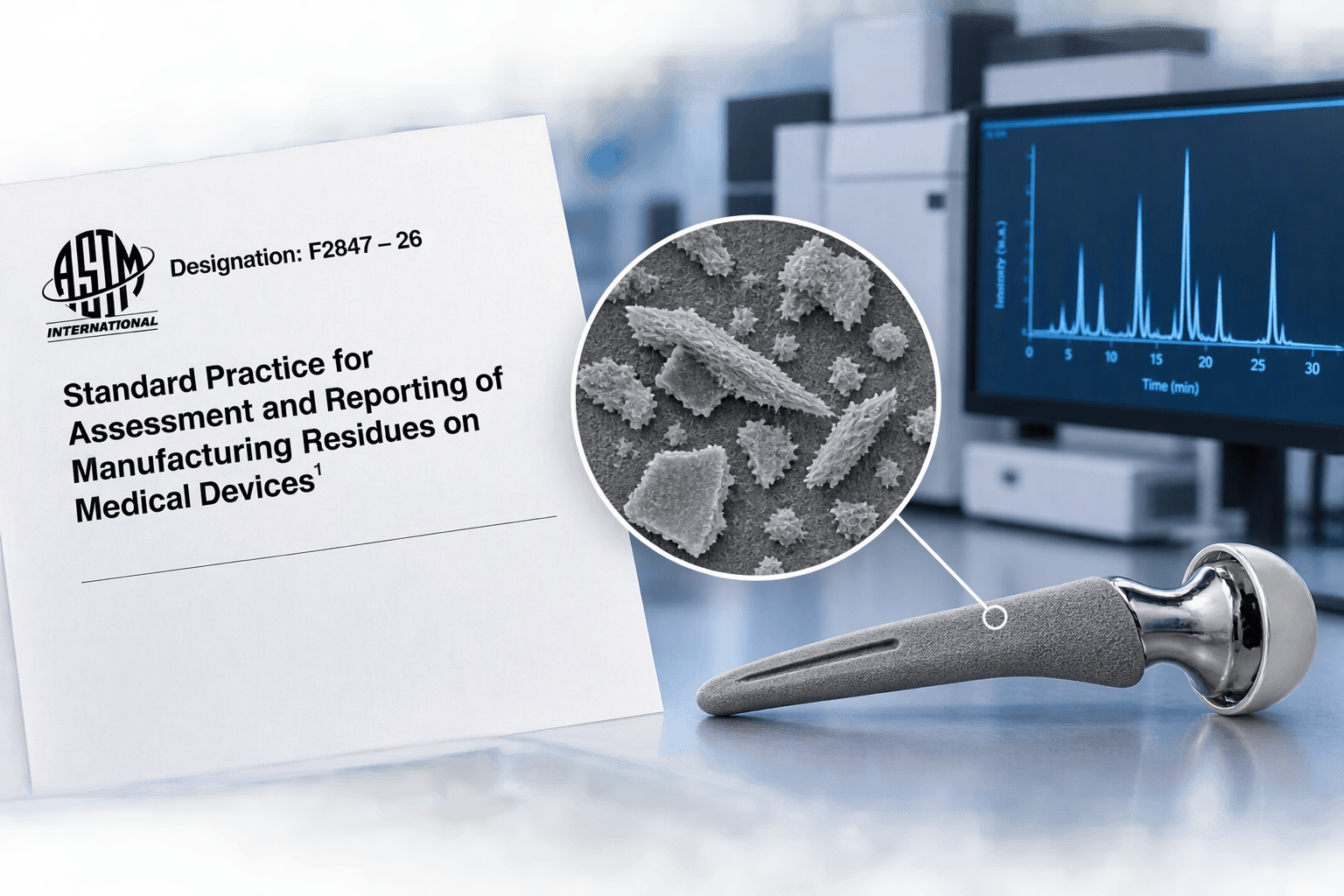 ASTM F2847-26 provides guidance for assessing and reporting manufacturing residues on medical devices, supporting comprehensive cleanliness and surface contamination evaluations.
ASTM F2847-26 Updated: Guidance for Selecting Analytical Techniques for Manufacturing Residues
ASTM has published ASTM F2847-26, the latest revision of its guide covering analytical techniques used to identify and quantify manufacturing residues on medical devices. Originally developed by an ASTM task group established in 2003 by personnel from Cambridge Polymer Group (CPG) and other ASTM volunteers, the guide was created to help users select analytical techniques […]
 Conceptual illustration depicting the use of acrylic in both large-scale sculpture and transparent submersible design.
Acrylic: From Art to Submersibles
When An Artist Advances Polymer Technology Innovations in plastic technology do not always originate in research laboratories. Sometimes they come from unexpected places. One of the most consequential advances in large-scale acrylic casting began with artist Bruce Beasley’s desire to create monumental sculptures that manipulated light. Acrylics are transparent polymers derived from acrylic acid and […]