
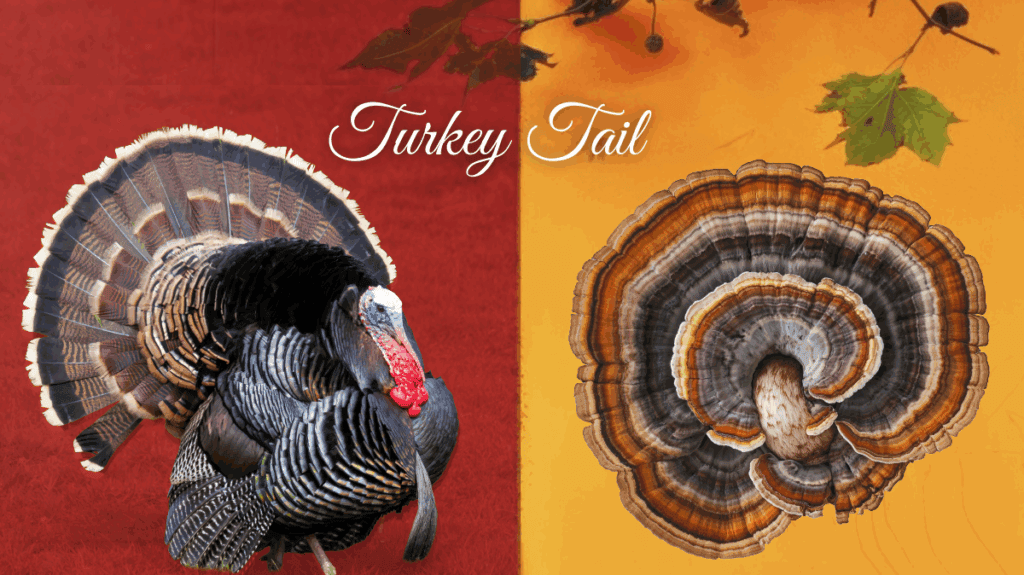
This deceptively simple shelf fungus is packed with complex polysaccharides and mycelial networks that inspire new approaches to immune‑modulating ingredients and bio‑based coatings, right at the intersection of biology and materials science that Cambridge Polymer Group’s clients navigate every day.
Polymers In A Mushroom: PSK, PSP And β‑Glucans
Turkey tail cell walls are rich in high molecular weight polysaccharide-peptides such as PSK (polysaccharide‑K) and PSP (polysaccharopeptide), which combine branched glucan backbones with peptide components. These macromolecules appear to work as a biological response modifier interacting with pattern recognition receptors (for example, Toll‑like receptors) and can modulate cytokine production, natural killer cell activity, and other immune pathways in preclinical and clinical studies.[1][3]
In Japan, a standardized PSK extract from T. versicolor has been used as an adjunct to conventional chemotherapy, and clinical data suggest effects on survival and quality‑of‑life endpoints in several solid tumors. [2] PSP and related fractions are under investigation for similar immunotherapeutic roles and for their ability to influence immune checkpoints and tumor microenvironments.[3]
Gut Microbiome And Prebiotic Effects
Like other fungal polysaccharides, turkey tail fractions behave as fermentable fibers for the gut microbiota, supporting short‑chain fatty acid production and enrichment of beneficial genera such as Lactobacillus and Bifidobacterium in experimental models. Reviews of fungal polysaccharides highlight their potential to modulate gut barrier integrity, systemic inflammation, and metabolic parameters via microbiome shifts, positioning turkey tail as a candidate prebiotic ingredient.[4]
For medical device and drug‑delivery developers, these data illustrate how specific polymer architectures (branching, peptide content, charge) translate into measurable biological responses in mucosal environments. Understanding these structure–function relationships is directly relevant when designing synthetic or semi‑synthetic hydrogels, coatings, and excipients intended to engage the same receptors and tissues.
Mycelium Coatings As Plastic Wrap Alternative
Recent work from University of Maine researchers has shown that turkey tail mycelium, combined with cellulose nanofibrils from wood pulp, can form thin, continuous coatings on paper, textiles, and wood. After several days of controlled growth and a heat‑treatment step, the resulting layer is food‑safe, biodegradable, and resistant to penetration by water, oils, and organic solvents such as n‑heptane and toluene.[5]
This “grown” coating behaves like a bio‑based barrier film, suggesting pathways to replace petroleum‑derived plastic wraps and cup linings. For packaging and materials engineers, it represents a living polymer processing route in which mycelial hyphae and fibrillated cellulose self‑assemble into a functional composite at low temperature and with renewable feedstocks.
Relevance For Medical And Industrial Polymers
From a polymer science perspective, turkey tail offers three complementary case studies.
- Immunoactive polysaccharide–peptides illustrate how subtle changes in glycan composition and peptide content shift receptor binding and downstream signaling, informing the design of bioactive coatings, adjuvants, and drug carriers.
- Prebiotic effects on the microbiome demonstrate that “inert” excipients can have system‑level consequences, a key consideration for oral devices, controlled‑release matrices, and combination products.
- Mycelium–cellulose coatings show how fungal growth can be harnessed as a fabrication step for barrier layers and biocomposites, pointing to future opportunities in sustainable packaging, tissue‑compatible substrates, and low‑impact foams.
As companies look to align product development with circular‑economy and ESG goals, bio‑derived polymers like those from Trametes versicolor highlight how materials design, biology, and regulatory science intersect. Cambridge Polymer Group can support clients in this space through characterization of bio‑based coatings and composites, structure–property testing of novel polysaccharide systems, and guidance on test strategies for biocompatibility and degradation under relevant standards.
[1] Standish LJ, Wenner CA, Sweet ES, et al. Trametes versicolor mushroom immune therapy in breast cancer. J Soc Integr Oncol. 2008;6(3):122–128. Available at: https://pmc.ncbi.nlm.nih.gov/articles/PMC2845472/
[2] PDQ Integrative, Alternative, and Complementary Therapies Editorial Board. Medicinal Mushrooms (PDQ®): Patient Version. National Cancer Institute; updated July 11, 2024. Available at: “How Two Document Examiners Solved the Case of the Salamander Letter.” https://www.ncbi.nlm.nih.gov/books/NBK424937/
[3] Saleh MH, Rashedi I, Keating A. Immunomodulatory properties of Coriolus versicolor: the role of polysaccharopeptide. Front Immunol. 2017;8:1087. Available at: https://www.frontiersin.org/articles/10.3389/fimmu.2017.01087/full
[4] Barcan AS, Barcan RA, Vamanu E. Therapeutic potential of fungal polysaccharides in gut microbiota regulation: implications for diabetes, neurodegeneration, and oncology. J Fungi. 2024;10(6):394. doi:10.3390/jof10060394. Available at:https://pmc.ncbi.nlm.nih.gov/articles/PMC11204944/
[5] Zier S, White LR, Johnstone D, et al. Growing sustainable barrier coatings from edible fungal mycelia. Langmuir. 2025;41(39):26751–26759. doi:10.1021/acs.langmuir.5c03185. Available at: https://doi.org/10.1021/acs.langmuir.5c03185