
 Conceptual illustration depicting the use of acrylic in both large-scale sculpture and transparent submersible design.
Acrylic: From Art to Submersibles
When An Artist Advances Polymer Technology Innovations in plastic technology do not always originate in research laboratories. Sometimes they come from unexpected places. One of the most consequential advances in large-scale acrylic casting began with artist Bruce Beasley’s desire to create monumental sculptures that manipulated light. Acrylics are transparent polymers derived from acrylic acid and […]
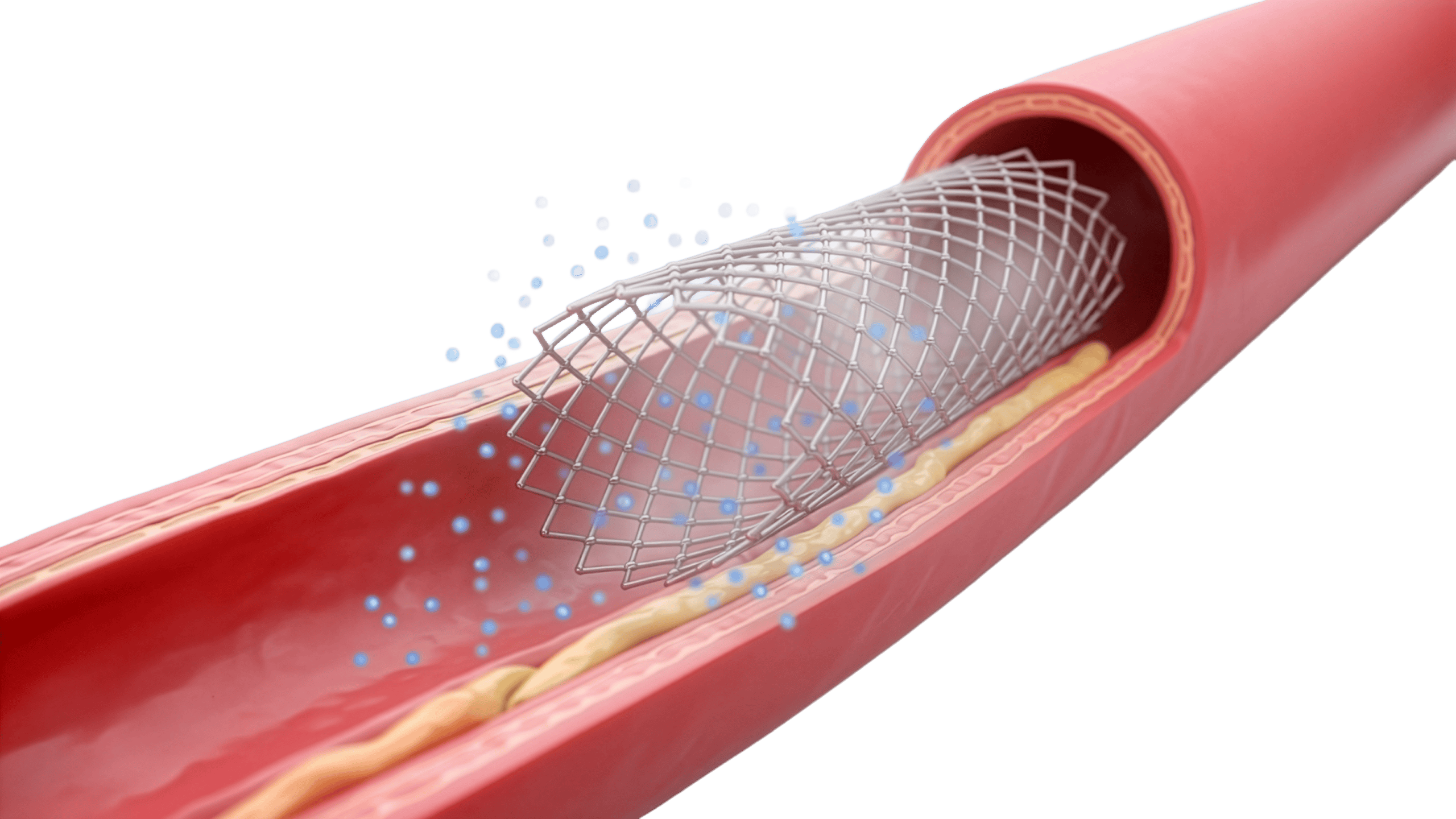
Beyond Drug Release: The Growing Role of Polymer Characterization in Drug-Eluting Stents
Drug-eluting stents (DES) have significantly improved outcomes for patients undergoing coronary interventions by reducing the risk of restenosis following implantation. The therapeutic effectiveness of these devices depends on controlled drug delivery, and long-term performance is influenced by the polymer coating responsible for delivering the active pharmaceutical ingredient (API). For manufacturers, understanding how these coatings change […]

Cambridge Polymer Group Achieves ISO 13485:2016 Certification
Cambridge Polymer Group (CPG) is delighted to announce that it has achieved for Polymers Contract Research, Extractables & Leachables Analytical Testing, and the Sales of Customized Bio-Medical Materials. For more than three decades, CPG has worked with medical device, life sciences, and healthcare organizations to address complex materials challenges. Our scientists and engineers combine polymer […]
 Cooling products are increasingly common in pet care. Researchers recently investigated reports of neurologic signs in dogs following ingestion of hydrogel from a commercial cooling pad.
How Analytical Testing Helped Identify a Plausible Cause of Canine Neurotoxicity
Fourteen dogs developed neurologic signs after ingesting hydrogel from a commercial cooling pet pad. When ASPCA Poison Control identified similarities across the cases, investigators sought to determine whether a component of the hydrogel could explain the clinical presentation. As a scientist at Cambridge Polymer Group and a co-author on this investigation, I was involved in […]
Smart Polymers: The Future of Controlled Drug Delivery
Characterizing Stimuli-Responsive Polymers for Targeted Drug Delivery and Controlled Release Stimuli-responsive polymers enable targeted drug delivery, but their performance is often difficult to predict, making rigorous analytical characterization essential to ensure reliable controlled release. These materials respond to environmental triggers such as pH, temperature, enzymatic activity, or redox conditions to control the release of active […]

Hydrogel Testing and Characterization: What Standards Exist and What Is Missing
There is a lack of specific standards for the characterization of hydrogels. As a result, developers must rely on adapted ASTM standards for rigid polymers and elastomers, or completely new approaches, while designing custom testing strategies that reflect real-world physiological conditions for hydrogel medical devices and combination products. Hydrogel development occupies a unique regulatory and […]

Engineering Realistic Tissue Response: Enabling Electrosurgical Training and Beyond
Synthetic Tissue Models for Electrosurgical Training At Cambridge Polymer Group (CPG), we develop and characterize advanced polymer systems, including hydrogels and other soft solids, to deliver controlled, application-specific material performance. A growing focus area is synthetic tissue models, engineered materials designed to replicate the complex mechanical, thermal, and electrical behavior of real tissue while offering […]

To Document or Not to Document: The Critical Role of Analytical Test Reports
A primary output from any analytical laboratory is the test report, a critical document that directly supports medical device development, regulatory submissions, and quality system activities. In the medical device industry, test reports are not just records of data—they are regulatory evidence used to support: Material selection and design decisions Design verification and validation Regulatory […]

What Powered Footwear Can Learn from Boston’s 26.2 Miles
As runners line up in Hopkinton for the Boston Marathon, having spent months obsessing over stack heights and foam durometers, Nike’s Project Amplify hints at a very different future: powered footwear that augments human motion The concept pairs a carbon-plated running shoe with a calf-mounted robotic cuff, essentially an e‑bike for your stride.[1] Even if […]

Global Bone Cement Shortage Disrupts Joint Replacement Surgeries
A production interruption at a major manufacturer has triggered a global bone cement shortage, forcing hospitals, especially in the UK, to delay or cancel hip and knee replacement surgeries, and prompting supply-chain reviews in other regions including the United States. Why Bone Cement Matters in Orthopedic Surgery Although many modern hip, knee, and shoulder replacements use […]