Posted by Cambridge Polymer Group on | Comments Off on Rheology’s Role in Dysphagia
Ever have a lump in your throat? You may have dysphagia, a medical condition whereby the patient has difficulty swallowing solids and liquids. There are multiple causes for dysphagia, ranging from gastroesophageal reflux to esophageal cancer. If not treated, pulmonary aspiration could occur when liquids enter the lungs by accident. Treatment of dysphagia depends on the source of the condition, but may be as simple as modifying swallowing behavior and changing diet, or it may require surgery for more complicated conditions.
Artificial Throat Monitors Flow Behavior of Food
We have often discussed the rheology, or flow behavior, of food products on our web site, and how it relates to taste and consumer perception. Rheology of food can also play a role in dysphagia. Thicker liquids may be easier to swallow for dysphagia patients. To test this theory, researchers at the University of Cambridge, headed by Professor Malcolm Mackley, constructed an artificial throat to monitor flow behavior of liquids of varying viscosities when ‘swallowed’ by the throat.
Dialysis tubing was used to model the throat, with rollers and counterweights representing the tongue. Optical access allowed the monitoring of the residence time of a bolus of fluid makes its way past the tongue and epiglottis.
Various fluids containing common thickeners used in the food industry (xantham gum, nutilis) were investigated. Shear and extensional rheometry were performed, since both these modes of deformation would be present in the throat, and provided key viscoelastic properties for the fluids.
The authors concluded that the viscoelastic properties of the test fluids played a role in the amount of time it took for the fluid to travel from the epiglottis to the airway, which could affect aspiration and patient comfort.
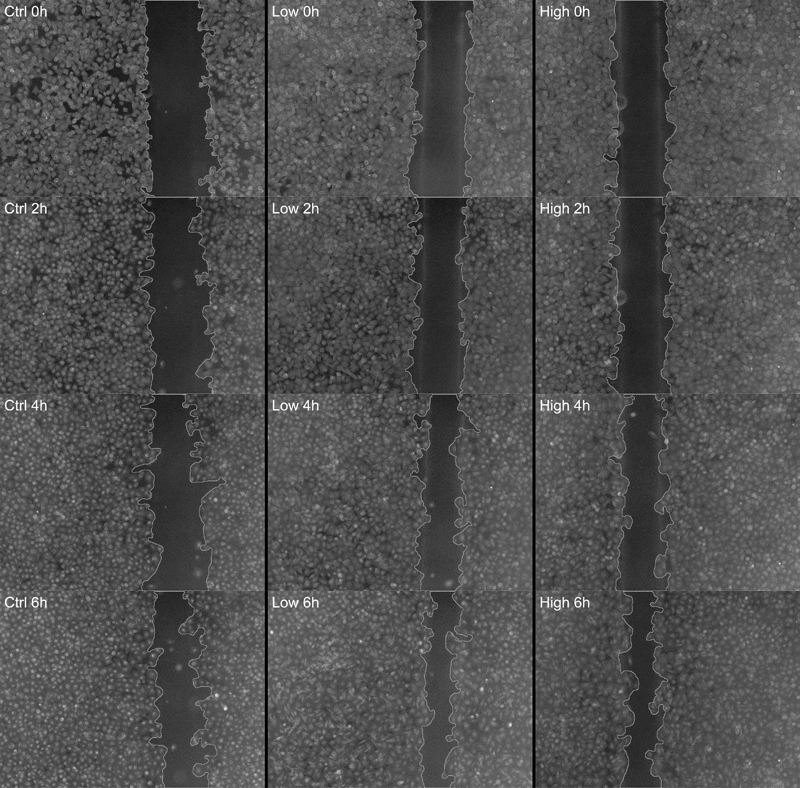
With their hydrogel system, wounds closed in less than 2 weeks. The peptide-hydrogel system promotes survival of the cells, and gives the cells a substrate to crawl over to help with wound closure.
Posted by Cambridge Polymer Group on | Comments Off on Caramel: A Baker’s Excuse for Over-Cooking
As the holiday baking season approaches, we are naturally thinking about caramel. At CPG, we have tested caramels and other food products in order to determine why some of these products have better ‘mouth-feel’ than others based on rheological assessment, a science sometimes termed ‘psychorheology’.
Chemistry of Caramel
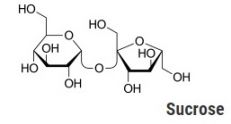
The discussion today, however, has to do with the chemistry of caramel. Caramel is the result of a decomposition reaction of sucrose (also known as table sugar) when it is heated to its decomposition temperature, between 170-186 C. Sucrose is a disaccharide made up of glucose and fructose. When it decomposes, water is released through a condensation reaction, along with glucose initially. Additional polymerization and isomerization then occurs, resulting in multiple high molecular weight compounds, as well as lower molecular weight compounds.
The lower molecular weight compounds are more volatile, and generate the characteristic aroma associated with caramels, including ethyl acetate (fruity/pineapple), furans (almonds), diacetyl (butter flavor), and maltols (toasted bread).
Sucrose, on the other hand, has a very mild odor, often not detectable due to its low volatility. The distinctive caramel smell is familiar to many polymer analysts who either deliberately or inadvertently decompose polysaccharides, generating many of the same compounds found in caramel.
The chemical reactions that occur at this stage are not really well known, even to this day. It is known that dimerization occurs, whereby two sugars reaction to form a single molecule containing three cyclical structures and a dianhydride. These structures are then believed to undergo hydrolysis reactions that product a compound called caramelan (C12H12O9), caramelen (C36H18O24) and. caramelin (C24H26O13), depending on the amount of water lost. These compounds form particles that have color centers believed to result in the color changes in caramel.
In addition to these reactions, free radicals are produced, which play a role in the tacky nature of caramels due to enhanced van der Waal’s interactions.
So although a great deal is not known about the chemical reactions in caramel, we can all perform our own enthusiastic home study on this wonderful cooking mistake.
Posted by Cambridge Polymer Group on | Comments Off on FDA Workshop on Refurbishing of Medical Devices
If you were not able to attend the FDA workshop on “Refurbishing, Reconditioning, Rebuilding, Remarketing, Remanufacturing, and Servicing of Medical Devices Performed by Third-Party Entities and Original Equipment Manufacturers” last October, the video and transcript are available here.
CPG President Stephen Spiegelberg speaks during October 28, Part 4.
Posted by Cambridge Polymer Group on | Comments Off on Nano Diet for Silkworms
Silk is recognized as an expensive, luxury textile material, having been used for several thousand years for fine fabrics, tapestries, clothing, and runs. Silk is a protein-based fiber produced by the larvae-form of several insects, most notably silkworms, but also by spiders, bees, beetles, and other insects. The mechanical properties of silk can rival synthetic fibers such as Kevlar. CPG co-founder Gareth McKinley, a professor at MIT, is doing research on spider silk in an effort to make military armor lighter and more flexible. CPG researchers McKinley and Braithwaite also have experience developing artificial spider silk.
Researchers from China discovered that feeding silk works carbon nanotubes permitted the natural production of reinforced silk fibers. A portion of the nanotubes fed to the silkworms was incorporated into the silk fibers, which modified the structural conformation of the silk fibroin, increasing the elongation at break and toughness.
Posted by Cambridge Polymer Group on | Comments Off on Tickling the Synthetic Formulations
You may have heard the expression ‘tickling the ivories,’ referring to someone playing the piano. This expression of course results from the original coverings on the white keys of a piano, which were ivory chips from the tusks of elephants and walruses. White piano keys were usually made of spruce or basswood so that the key was light and could provide a fast action, and then clad in ivory on the top and front of the key only. The black keys were made of ebony, a dense hardwood. Ivory was abandoned by the piano industry in the 1970s, and any imported piano containing ivory keys must have providential documentation showing it was made prior to the importation ban, or it will have the ivory removed from the piano.
Synthetic Piano Key Formulations
For a while after the ivory ban, keyboard manufacturers simply used injection molded plastic as the white keyboard cover, but the material, usually ABS, did not have the same feel as ivory, and piano-players became disgruntled due to the slipperiness of the plastic keys. In response, material scientists began experimenting with alternative synthetic formulations that would yield a similar feel as ivory. Yamaha produced a material called Ivorite, which is believed to be made from ABS with mineral reinforcement. A few manufacturers use nitrocellulose fiber reinforced with silica filler (Kawaii’s Neotex and a material called Pyralin). Various other ivory-replacement compositions include Ivorine and Ivoplast. Yamaha also experimented with white keys made from casein (from animal milk), reinforced with elastomers for improved impact strength, and then hardened with formalin. In addition to the formulations, manufacturers worked on micropatterning the surface of keys, adding porogens to create porosity, and inducing specific surface roughness during molding so that the keys have a similar friction to ivory, and will also have some absorptivity of perspiration and skin oils to reduce the slick feeling of plastics. This micropatterning provides a similar tactile action to ivory keys, according to these manufacturers.
Benefits of Non-Ivory Keys
One key (sorry) benefit of the non-ivory keys is their resistance to yellowing, an issue with the older ivory keys. Additionally, it was always challenging to match the color and porosity of ivory keys, in addition to the size of each key, so ivory keyboards tended to have a non-uniform appearance. For those who still clamor for the feel of ivory in a non-synthetic source, some piano companies will make key covers out of oxbone or other non-endangered animal bones. Most piano players prefer tickling the white uniformity of synthetic keys.
Posted by Cambridge Polymer Group on | Comments Off on Degradable Products in Medical Devices
Join Cambridge Polymer Group scientists Adam Kozak and Stephen Spiegelberg for a webinar on how to establish and mitigate the risks of degradable products in medical devices.
This webinar will focus on techniques to identify and quantify degradation products in in vitro and in vivo environments. Knowledge of the kinetics of degradation products and the degradation pathway will allow researchers to validate simulated in vivo environments and to establish risk profiles for degradable products based on biocompatibility concerns. The techniques are applicable to materials for permanent implants and to biodegradable materials.
This webinar is targeted towards:
Biomedical engineers
Medical product designers
Material engineers
Regulatory personnel
Duration: 30 minutes
Degradable Products in Medical Devices Webinar
Thursday, December 8, 2 p.m., Eastern Standard Time
Posted by Cambridge Polymer Group on | Comments Off on Reprocessing Medical Devices Primer
With the upcoming ASTM workshop on reprocessing of re-usable devices, we thought a primer on this important area of the health care industry would be in order. Reprocessing is a set of procedures that will take a previously used medical device and return it to a state fit for a subsequent clinical use. Usually, the most important steps in reprocessing include (1) cleaning; and (2) disinfection or sterilization.
Cleaning
The cleaning step should remove biological soils, such as blood and tissue, as well as any other materials that may have contacted the medical device, such as hospital disinfectants, lubricants.
Disinfection
The disinfection or sterilization step is a completely separate step from cleaning, and neither can be substituted for the other. The choice of disinfection (the killing of some or most microorganisms, with the exception of bacterial spores, depending on the level of disinfection) or sterilization (killing all microorganisms to a log reduction, typically 1E-6) depends on the application area where the medical device is used.
Re-usable Medical Devices
A re-usable medical device is one that is intended to be used on multiple patients with reprocessing between each patient. Examples of reusable devices include forceps, stethoscopes, endoscopes, scissors, arthroscopic shavers, and suction tubes. Reprocessing is often conducted either at hospitals or by third body reprocessors. It is up the reprocessor to demonstrate a validated reprocessing procedure for each medical device, which involves demonstration of adequate cleaning through verification tests. The original equipment manufacturer should ensure that the device is designed and constructed to allow reprocessing, and provide adequate instructions on how to reprocess the device, along with appropriate labeling. Proper selection of materials that can undergo repeated reprocessing is an important consideration as well.
The FDA issued a guideline on reprocessing of re-usable medical devices in 2015.
CPG Transitions from ISO 9001:2008 to the Updated ISO 9001:2015 Standard
Cambridge Polymer Group is pleased to announce that it is now certified as an ISO 9001:2015 compliant organization by International Certifications Ltd.
CPG is certified as meeting the requirements of ISO 9001:2015 for the following activities:
Contract Research and Analytical Testing Laboratory
Design and Manufacture of Custom Materials and Instrumentation
Previous to transitioning to the ISO 9001:2015 standard this November, CPG has maintained ISO 9001:2008 certification since 2010.
ISO 9001:2008 vs. ISO 9001:2015
In September 2015, the International Organization for Standardization released a new revision of the ISO 9001 standard, giving ISO 9001:2008 certified organizations three years to transition.
In addition to the rigorous quality requirements of ISO 9001:2008, ISO 9001:2015 stipulates that certified organizations assess risk, not only to themselves but also to customers and stakeholders. The updated standard ensures that ISO 9001:2015 certified organizations pay greater attention to the external perspective of customers.
Cambridge Polymer Group’s Commitment to Quality
CPG’s early attainment of ISO 9001:2015 demonstrates our commitment to our customers and to quality. We strive to understand our customers’ needs and to meet and exceed expectations. Our quality policy is an integral part of our strategy of being recognized as the premier contract research organization in North America, offering a full range of contract research services, excellent technical support and innovative products.
Posted by Cambridge Polymer Group on | Comments Off on Origin of the Jack O’Lantern
Originally, “Jack o’lantern” meant “man with a lantern,” but was later used to describe the lights that floated over bogs, swamps and marshes. Before science provided possible explanations for these lights, many believed the illuminations to be wandering spirits. Irish children carved lanterns out of turnips and carried them about, simulating the floating lights to scare friends and neighbors.
When the Irish immigrated to North America, they found pumpkins ideal for vegetable lanterns. With its hard, smooth outside rind, the orange Curcurbita was perfect for sculpting scary designs. Carving jack o’lanterns became a popular American Halloween tradition.
Chemical Reactions of Swamp Gases
What was the real cause of the ghost lights? When Italian physicist Alessandro Volta discovered methane in 1776, he posited that the swamp gas interacting with natural electricity produced the swamp lights. Although his hypothesis did not receive much support at the time, it is now generally accepted that the lights are produced by the oxidation of phosphine (PH3), diphosphane (P2H4), and methane (CH4). Created by organic decay, these compounds can cause photon emissions. Only small amounts of phosphine and diphosphane mixtures would be needed to ignite the more plentiful methane to create the swamp lights.
An alternative modern explanation for the lights could be cold flames. These are luminescent pre-combustion auras produced when certain compounds are heated to just below ignition point. Cold flames are usually bluish in color and create very little heat. They occur in an assortment of compounds, including hydrocarbons, alcohols, aldehydes, oils, acids, and waxes. Whether cold flames occur naturally is not known, though many of the compounds which produce cold flames are the byproducts of organic decay.
Other modern hypotheses for the ghost lights include the bio-luminescence of fungus and insects, and the geologic phenomenon of piezoelectricity created under tectonic strain.
Happy Halloween
At CPG, we pumped our pumpkin full of liquid nitrogen, which we usually use for DMA, TGA, FTIR, and LC-MS. Because we’re not just great at solving your polymer problems, we also know how to have some Halloween fun.