Posted by Cambridge Polymer Group on | Comments Off on Patent on Mosaicplasty Implants Issued to CPG Researchers
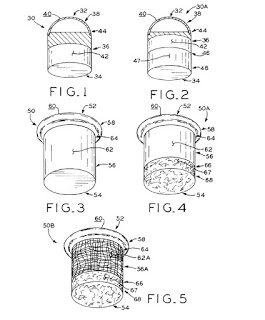
US Patent 9,289,302 was issued on March 22, 2016 to CPG researchers. The patent describes designs and methods for making implants for focal cartilage tears in load bearing implants, such as hips and knees. The construct designs make use of a surgical procedure termed mosaicplasty, whereby a plug of healthy osteochondral plug is removed from a non-load bearing portion of the joint, and placed in a drilled out cavity in the focal defect. In this patent, synthetic plugs are created based on hybrid structures of polymers and metal repair the focal defects.
Posted by Cambridge Polymer Group on | Comments Off on FDA Draft Guidance Document on UHMWPE
The FDA issued a draft guidance document on the required testing for devices using ultra high molecular weight polyethylene (UHMWPE) in February 2016. The guidance document separates UHMWPE into four categories: (1) conventional UHMWPE; (2) highly crosslinked UHMWPE; (3) Vitamin E stabilized UHMWPE; and (4) other forms of UHMWPE, including porous UHMWPE. In each category, test methods are suggested, including fatigue crack propagation, crystallinity assessment, oxidation index measurements, crosslink density, free radical concentration, radiation by-products determination, and antioxidant concentration. The guidance document indicates that some properties, such as mechanical characterization through tensile and impact strength, need to meet minimum threshold values indicated by ASTM F648, whereas other properties should be compared to results obtained from a predicate material.
Cambridge Polymer Group has extensive experience in testing UHMWPE to this guidance document. Contact us for more information. Additional information on UHMWPE characterization can be found on our website.
The draft guidance document is available for public comments for 90 days. Comments can be submitted here.
Posted by Cambridge Polymer Group on | Comments Off on Potential FDA Ban on Powdered Gloves
The FDA recently released a statement proposing a ban on most powdered surgical gloves in the United States. The powder, usually in the form of corn starch, is added to facilitate putting on the gloves and taking them off, as well as providing some comfort. The FDA’s concerns about the powder stems from its use in latex gloves, which are known to cause an allergic reaction in some people due to the presence of latex proteins. A 1997 study by the FDA showed that the powder used in latex gloves can act as an airborne carrier for these latex proteins, as the latex proteins can bind to the cornstarch. The resulting aerosolized powder can lead to respiratory allergic reactions. The powder could also potentially get into wound sites and cause dermal allergic reactions.
The proposed ban is currently available for public comment for 90 days. Comments can be made at this web site.
Posted by Cambridge Polymer Group on | Comments Off on Residual Solvents in Pharmaceuticals
Residual solvents can sometimes be found in pharmaceuticals after processing. These solvents are sometimes used during manufacturing to synthesize, purify or blend the active pharmaceutical ingredient (API) with excipients, or may be used elsewhere in the manufacturing process, from solvents to clean equipment or solvents used in the packaging process. Often, these solvents can be hazardous if present in levels above a critical threshold. USP provides three levels of solvent classes based on their potential risk. Class 1 describes solvents to be avoided, which includes known and suspected carcinogens (examples include benzene and 1,2 dichloroethane). Class 2 describes solvents to be limited in their use, and includes nongenotoxic animal carcinogens and other significant but reversible toxicities (examples include chloroform, toluene, ethylene glycol) . Class 3 describes solvents with low toxic potential (examples include acetone, isopropyl alcohol, ethyl acetate). USP provides permitted daily exposure (PDE) thresholds for the individual solvents in each class. Other residual solvents, for which no adequate toxicological data is available, are also discussed.
Analysis of pharmaceutical compounds for residual solvents is normally performed by gas chromatography with mass spectroscopy coupled to either a flame ionization detector or a mass spectrometer, often with a head-space system used for sample introduction. This analysis requires the optimization of test conditions to ensure adequate separation of the various compounds in the chromatography column. Limits of detection and quantification, along with linearity, precision, and percent recovery are then determined for the specific solvent and matrix. Depending on the solvent and matrix, limits of detection can be as low as several parts per billion.
Posted by Cambridge Polymer Group on | Comments Off on Duck, Deformulated
The ubiquitous bathtub duck, historically referred to as a rubber duck, is actually often made from plasticized polyvinyl chloride. Our scientists measured the composition of commercial bathtub ducks, investigating the base resin with infrared spectroscopy, plasticizers with gas and liquid chromatography, and fillers with energy dispersive spectroscopy. And, because it is important to know if your duck is impact resistant at both room temperature and cryo-temperatures, we did that testing also. Read more about these results in this application note.
Posted by Cambridge Polymer Group on | Comments Off on Degradation Products from In Vivo Studies
Multiple degradable thermoplastics are being used for implant or other in vivo use in the medical industry. Polycaprolactone, polylactic acid, poly lactic-co-glycolic acid and polydioxanone are just four examples of polymers that will biodegrade when placed in the body through a hydrolysis reaction. The benefits of these polymers for biomedical applications depend on their degradation rates, properties during degradation, and the degradation compounds. Whereas there are fairly well established methods for assessing degradation rates and the resulting properties of the degrading polymer, determination of the degradation products can be more challenging. Often, researchers will perform in situ degradation studies, using a simulated environment such as phosphate buffered saline, enzymatic solutions, or similar, with the assumption that these in situ environments will result in the same degradation pathway as an in vivo environment.
CPG has developed assays that allow the identification and quantification of degradation products of biodegradable polymers from animal studies. En bloc tissue samples containing the device and surrounding tissue are analyzed for degradation products amongst the biological tissue. The results can then be compared to in vitro degradation samples to assess if the in vitro assay is faithfully generating the same degradation products as the in vivo test.
Posted by Cambridge Polymer Group on | Comments Off on Notch Fatigue of Ultrahigh Molecular Weight Polyethylene (UHMWPE) used in Total Joint Replacements
CPG researcher Adam Kozak was a co-author on a recently published article in the Journal of the Mechanical Behavior of Biomedical Materials. Along with co-authors from UC-Berkeley (Ansari, Gludovatz, Ritchie, and Pruitt), these researchers investigated the sensitivity of ultra high molecular weight polyethylene (UHMWPE) to fatigue when stress concentration sites are present in the form of notches. The authors investigated 3 formulations of UHMWPE commonly used in hip or knee implants today, and found that the sensitivity to crack propagation resulting from fatigue was more sensitive to microstructure, such as crosslink density, rather than specifics of the notch geometry.
Posted by Cambridge Polymer Group on | Comments Off on Trace Formaldehyde Detection
Formaldehyde, or CH2O, is commonly used in producing resins for coatings and adhesives, automotive materials, as well as materials for the textile industry. In these applications, the formaldehyde is normally incorporated into the material through a chemical reaction, and hence loses its chemical identity. Formaldehyde is also a by-product of some chemical reactions.
Aqueous solutions of formaldehyde, also known as formalin, are used as disinfecting agent for biological tissues, in that it is effective in killing bacteria and fungi. This toxicity to bacteria applies to humans as well, prompting manufacturers to reduce residual formaldehyde to safe levels in manufactured products.
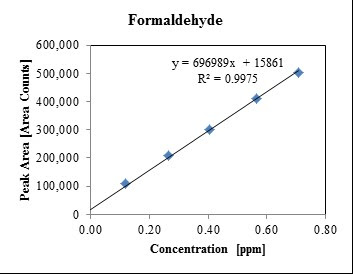
CPG has developed sensitive techniques to measure trace levels of formaldehyde in a variety of matrices. This approach allows manufacturers to determine whether their formaldehyde levels have been reduced below threshold levels.
Contact CPG for more information on formaldehyde testing.
Posted by Cambridge Polymer Group on | Comments Off on Microbeads in Toothpaste
Ever wonder what those little blue particles are in some toothpastes? One of our scientists did, and started to investigate their effects on teeth brushing. Known as microbeads or microplastics, these blue particles are usually polyethylene or polypropylene. They are commonly included as exfoliants in face cleansers, and may be added to toothpaste for visual effects.
CPG researcher Lucas Rossier performed a bench top study comparing enamel wear using toothpastes with and without microbeads. A model enamel substrate was used in place of an actual tooth surface. Through optical and electron microscopy, Rossier showed greater scratching and abrasive wear in the toothpaste containing microbeads. Although the results may not be directly comparable to actual tooth enamel wear, they do demonstrate that the microparticles have an abrasive effect that is greater than the toothpaste alone.
Posted by Cambridge Polymer Group on | Comments Off on Why Polymer Scientists Make Great Cooks
Okay, so my wife may disagree. However, the long chain nature of a lot of food products (i.e. their polymeric nature) allows us to at least understand the physics behind the behavior of food.
Cooks have known the secret of thickening sauces and gravies with a fairly small amount of flour or cornstarch. A key aspect of this process is to add the flour or starch when the sauce is fairly cool, mix well, and THEN apply heat. At some point in the heating process, the sauce will magically start thickening (i.e. the viscosity increases).
So what is happening? First off, the key material is starch, which is found in flour and of course corn starch. Starch is a polysaccharide, or a polymer made up of glucose (sugar) repeat units with glycosidic bonds. Starch is derived from various types of plants, and can have varying degrees of amylose and amylopectin, the two types of molecules making up starch. At room temperature, starch is not soluble in water, due to its crystalline nature. The molecules in the starch can fold themselves into tightly ordered sections, with thousands of the amylose and amylopectin molecules tightly bound into small micron-sized particles. This is how they initially start in the sauce. The small particles do not affect the viscosity in any measurable way. Once the sauce is heated, however, sufficient energy is put in the starch granules to overcome the melting point, and the chains start to unfold, stretching out and entangling with other chains. The long, entangle molecules of the amylose and amylopectin increase the viscosity of the sauce, thereby ‘thickening’ it.
Having problems with lumps in your gravy? The gravy was too warm when you added the flour or corn starch, and the starch granules began to swell and expand while they were still in a bundle, preventing them from spreading out in the gravy. By adding them to cool gravy, you can distribute the granules before they expand and entangle.
This thickening behavior of gravy with temperature can be nicely captured by shear rheometry.