Posted by Cambridge Polymer Group on | Comments Off on Shrimp Vision
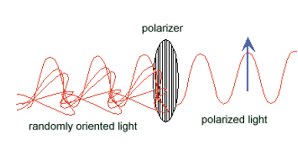
Polymer scientists often use polarized light to optically examine features in polymers, such as crystallinity and residual stress, through the phenomenon of birefringence. White light, such as that coming from the sun and incandescent light bulbs, is comprised of multiple wavelengths of light traveling in multiple planes. When white light passes through a polarizer (which is a type of linear optical filter that only permits waves oriented in the same direction of the linear direction of the polarizer to pass through, and blocks all others, as shown in Figure 1), the randomly oriented light becomes plane-polarized in a single optical plane.
Figure 1: Schematic of randomly oriented white light passing through a polarizer, becoming plane-polarized light with the principle axis indicated by the blue arrow.A similar phenomenon occurs when white light is reflected off of a flat surface, such as a body of water or a metal or glass surface. You may have experienced this phenomenon when wearing polarized sunglasses while looking at the ocean or your smart phone. In some orientations of the glasses relative to the ocean or phone, the light intensity is greatly diminished (and you may not be able to see the images on your phone) because the polarizer in your glasses is blocking a percentage of the plane-polarized light reflecting off the surface of the object you are looking at. By rotating your head in a clockwise fashion, the light intensity will decrease or increase as angle of the plane-polarized light moves towards or away from 90º from the principle angle of your glasses. More details on the math associated with light polarization can be found on our birefringence application note.
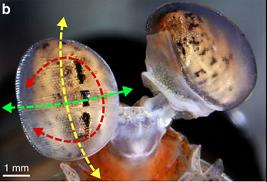
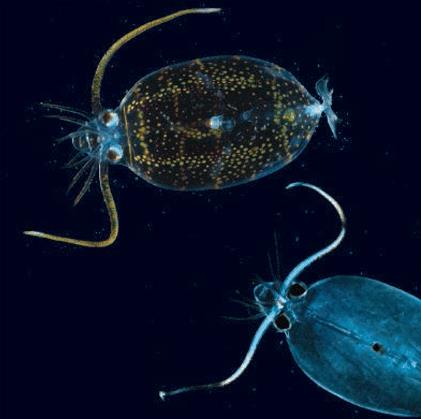
The use of polarization of light in nature is commonplace. It has been known for decades that insects (bees, ants, beetles) use the atmospheric polarization of light[1] to navigate to and from their home bases.[2] Whereas these insects do not have traditional polarizers, they do have specific arrangements of photoreceptors that maximize the absorption of polarized light. Using polarized light aids in the sky and in reflected light off the ground and off plants, the insects can ably navigate. In most cases, the photoreceptor systems are fixed relative to the animal’s eyes. However, it was recently discovered that the mantis shrimp is able to rotate its eyes independently, effectively adjusting the principle orientation of its ‘polarizer’ to maximize the signal of incoming polarized light (see Figure 2). What do they do with this information? Identify food sources, for one thing. Many of the jelly-fish and multi-cell organisms in the ocean are nearly transparent to the naked eye. However, to a creature tuned into polarized light, these amorphous organisms light up against the dark ocean back ground as the plane polarized sunlight passes through their bodies, making them easy targets for hunting by the shrimp (see Figure 3).
Figure 2: Rotational degrees of freedom in Odontodactylus cultrifer.[3]
Figure 3: Transparent organisms made visible with polarized light.[4]
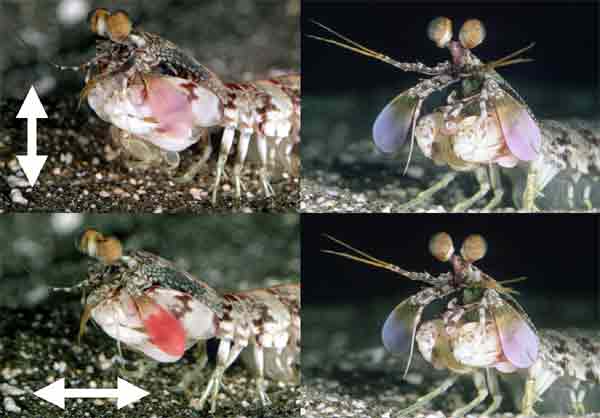
But the shrimp have a secondary use for polarized light, namely communication. Scientists have noticed distinct color patterns on shrimp that are only visible when observed through a polarization filter. As shown in Figure 4, the male shrimp has a distinct red pattern visible when the polarizer is oriented horizontally. The female (on the right) does not have this pattern, suggesting that the pattern may be useful for shrimp courtship.
Figure 4: Male (left) and female (right) mantis shrimps, showing a clear difference in polarizing signals (the arrows show the orientation of the camera polarizing filter). This method of communication may be important for mating.[5]
Let’s hope that shrimp continue to use this optical power for food and mating, so that they don’t push us polymer scientists out of our jobs.
[1] The unpolarized light from the sun is scattered by water molecules, gas molecules, and particles in our atmosphere, resulting in localized polarization in regions of the sky.
[2] Wehner, “Polarized-light navigation by insects,” Scientific American, 106 (1976).
Posted by Cambridge Polymer Group on | Comments Off on You Don’t Look Your Age: Accelerated Aging of Paper
At Cambridge Polymer Group, we help many of our clients evaluate their materials or device by applying accelerated aging techniques to accelerate material degradation, either for shelf life estimation or as part of an evaluation of material stability. Such testing may be performed following standard procedures like ASTM F1980, ASTM F2003, as well as custom aging studies which expose the material to specific environments which a particular product or material is expected to experience during end use. Selection of accelerated aging conditions requires careful consideration of the device composition, its materials’ properties, storage conditions, the end use environment, and the assumptions implicit in the accelerated aging calculations. As such we are always interested in test methodologies and case studies of material aging (whether accelerated or real time).
Accidental Accelerated Aging of Paper
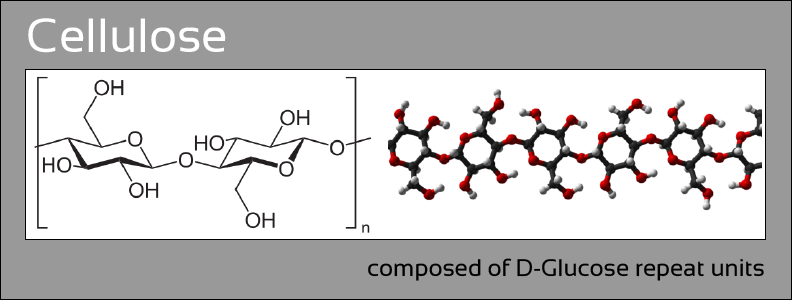
Consider the storage of paper. Paper is composed of principally cellulose fibers, which are a naturally derived polymer—a polysaccharide with D-glucose as the repeat unit. Anyone who has dug in the far back corner of the university library basement stacks or through a box of books in Grandma’s stuffy attic knows that paper is subject to yellowing, degradation, and that “old book smell”. Naturally, for important documents, steps are implemented to preserve the documents and slow the degradation process. But such mitigating practices have in some cases been counterproductive.
Lamination
Starting in the 1950s, South Carolina’s state archives and history department laminated many thousands of documents for the purpose of preserving them. Seems ok, right? Sealing the paper away from the outside environment should prevent moisture and oxygen from causing damage. Except the opposite result has been observed after many years—the laminated documents are observed to yellow and even produce the scent of vinegar. Something’s wrong!
Sheet Proximity
Similarly, researchers at the Library of Congress performing accelerated aging studies tested cases where individual sheets of paper were left exposed to the atmosphere or placed in stacks containing many sheets in close proximity. Intuitively, one may expect that the sheets more exposed to the environment would age faster due to their greater exposed surface area. The opposite result is observed—the Library of Congress study found that stacks of paper were the ones aging more rapidly. What’s going on?
The Importance of Material Chemistry
The intuitive reasoning above ignores an important potential source of degradation; the paper itself and its protective materials – whether lamination or adjacent paper sheets. Researchers at the Library of Congress have found that acids (even trace acids in “acid free” paper) from within the material stimulate acid hydrolysis of the cellulose, a byproduct of which is additional acids which cause more hydrolysis and degradation. As a result, even acid free or pH neutral papers have been observed to become increasingly acidic as they age. When such paper is laminated or stacked among adjacent sheets, such acids are allowed to build up and, counterproductively, accelerate damage to the document. It should also be noted that such acid and volatile organic compound (VOC) byproducts of the paper degradation are responsible for that “old book smell” in the university stacks (so perhaps don’t breathe too deep).
The above situations are excellent case studies on the importance of carefully considering the chemistry of the underlying material prior to making design decisions on material storage or experimental decisions for accelerated aging studies (which may yield invalid results if founded on faulty assumptions).
Do you need assistance with accelerated aging, experimental design, stability testing, or volatile organic compound analysis? Contact Cambridge Polymer Group to see how we may be able to assist your team.
Posted by Cambridge Polymer Group on | Comments Off on Cambridge Polymer Awarded $225K SBIR Grant from NIH
CPG research team to develop injectable hydrogel technology for eye tamponade
Cambridge Polymer Group Inc has been awarded a $225,000 Phase 1 Small Business Innovation Research (SBIR) grant by the National Institutes of Health (NIH) to develop an injectable hydrogel for use as an eye tamponade.
Retinal detachment is a common eye injury that often causes vision loss in patients. The surgical procedure requires the temporary removal of the vitreous humor, the clear gel in the eye, prior to reattachment of the retina to the back of the eye. Following the operation, the retina needs to remain in contact with the back of the eye during the healing process, or it may become detached again. Surgeons currently achieve this process by either using a silicone oil, which distorts vision and requires a second surgery to remove, or with a gas bubble, which requires inconvenient head placement for the patient.
As an alternative, Cambridge Polymer Group’s team of hydrogel scientists are developing a hydrogel that can be injected in as liquid through a fine needle or cannula, and then gels in the eye. This hydrogel will assist in keeping the retina attached to the back wall of the eye, and will then degrade over time, obviating the need for a second surgery. The hydrogel should also allow vision through the eye while it is in place, resulting in greater patient mobility and compliance.
Cambridge Polymer Group’s Vice President of Research, Dr. Gavin Braithwaite, is the principal investigator on the research grant. “We are pleased with the opportunity the NIH SBIR program has given us to move our patent-pending technology from the laboratory bench into pre-clinical studies,” stated Dr. Braithwaite.
Posted by Cambridge Polymer Group on | Comments Off on Hyaluronic Acid: A Question of Size
Figure 1: Top right—repeat unit of hyaluronic acid, a material particularly concentrated in (among other tissues) chicken combs (left). Bottom right—representative triplicate determinations of three samples of hyaluronic acid of distinct molecular weights.
Chemical Properties of Hyaluronic Acid
Hyaluronic acid (HA) is a naturally synthesized highly linear polysaccharide found in a variety of tissues including the joint space, vitreous humor, connective tissue, synovial fluid, and even chicken combs (Fig 1 left). Naturally synthesized HA is typically of a very high molecular weight well over 1,000,000 g/mol; it is extremely hydrophilic, highly lubricious, undergoes degradation in response to naturally occurring hyaluronidase enzymes, and binds to a variety of biological receptors. Such properties have driven interest in the use of HA in a variety of applications such as for the treatment of osteoarthritis knee pain, drug delivery/targeting, and tissue engineering.
In a physiological solution, the HA molecule is understood to exist in a twisted and entangled ribbon structure evolving from a combination of its repeat unit structure, internal hydrogen bonding effects, ionic interactions with the solvent, and its highly linear structure. These properties, in conjunction with the molecular weight of HA, have been shown to strongly affect its functional rheological properties, as has been reported by CPG scientists in the past.[1]
The accurate assessment of HA’s molecular weight therefore is an invaluable tool for applications such as material characterization, stability assessment, delivery behavior, and quality control. However, the same properties which lend to its unique properties also make molecular weight analysis of the material extremely challenging.
Molecular Weight Determination of HA
Polymer molecular weight is commonly determined by gel permeation chromatography (GPC; also known as size exclusion chromatography or SEC). However, due to the polymer’s extremely high intrinsic viscosity, large hydrodynamic volume, slow reptation rate, highly linear structure, and propensity for entanglement effects and shear degradation, analytical conditions must be chosen extremely carefully.
Some key analytical process variables which may dramatically impact measured molecular weights include sample concentration, dissolution time/temperature/agitation, solution handling, sample filtration (or lack thereof), mobile phase selection, injection volumes, flow rate, column selection, and calibration methodology. No conventional molecular weight calibration standards exist which may be used for HA analysis, and as a result, absolute molecular weight analysis by light scattering or triple detection is most commonly performed instead for accurate MW measurement.
CPG has validated an in-house method for the determination of hyaluronic acid molecular weight distributions by triple detection GPC (Fig 1, lower right). Contact us for additional information on this methodology and to see how CPG can work with you. CPG is an ISO 17025 accredited contract research and analytical testing lab based out of Boston, MA.
[1] Gavin J. C. Braithwaite, Michael J. Daley & David Toledo-Velasquez (2016) Rheological and molecular weight comparisons of approved hyaluronic acid products – preliminary standards for establishing class III medical device equivalence, Journal of Biomaterials Science, Polymer Edition, 27:3, 235-246, DOI:10.1080/09205063.2015.1119035
Posted by Cambridge Polymer Group on | Comments Off on Triggerable Tough Hydrogels for Drug Delivery
Patients who won’t take their medications are one of the great frustrations of 21st century doctors. According to The Annals of Internal Medicine, 20-30% of medication prescriptions are never filled, and 50% of medications for chronic disease are not taken as prescribed. The New York Times says this nonadherence to prescribed medication costs the American health care system $100-$289 billion per year.
While many doctors advise making pill-taking a habit (such as tooth brushing), wouldn’t it be easier if patients could just take one pill that released dosages slowly over time? Current swallowable drug delivery systems are problematic because they are composed of tough plastics. These thermoplastics may cause blockages in the gastrointestinal tract and are hard to remove in the event of an adverse reaction to the drug.
A Small Pill to Swallow
Researchers from Brigham & Women’s Hospital, MIT, and the Koch Institute for Integrative Cancer Research have created a new type of drug delivery material that is more biocompatible than thermoplastic. In collaboration with the Bill and Melinda Gates Foundation, they have developed a triggerable tough hydrogel (TTH), strong enough to tolerate the stress of the GI tract and triggerable to dissolve in case of allergic reaction or negative side effects.
Hydrogels are polymer gels that swell when hydrated. When dry, the TTH capsule is small enough to be swallowed. The capsule then expands in the stomach, preventing further passage down the GI tract. Researchers loaded the TTH capsule with the drug lumefantrine and found the device to successfully release the antimalarial in a controlled manner over a period of days.
Making & Breaking Polymer Crosslinks
Traditional hydrogels are too weak to withstand the compressing and shearing forces of the GI environment; to strengthen their delivery device, TTH researchers created a double network hydrogel, composed of two interwoven polymer nets. One network is made of alginate (derived from seaweed); the other of polyacrylamide. When tested, this double network was strong enough to resist fracture, even under pressure from a razor blade.
If the drug needs to be removed, the patient swallows biocompatible antidotes, ethylenediaminetetraacetic acid (EDTA, a food preservative) and glutathione (GSH), which dissolve the crosslinks between the polymer nets.
When tested, the TTH capsules lasted for up to 9 days in the stomachs of large animal models. The next step will be additional pre-clinical studies to test hydrogel safety and stress resistance. Ultimately, researchers hope to find ways to extend capsule life, for dosage release over weeks or months.
Posted by Cambridge Polymer Group on | Comments Off on Chemistry of Scotch Whisky
July 27th is National Scotch Whisky Day in the United States. Why was today chosen for this particular honor? No one seems to know or care, however, most seem to appreciate the excuse to sample Scotland’s liquid gold.
Scotland takes its whisky production very seriously. Understandably so – aqua vitae pumps nearly £5 billion into the Scottish economy annually. The Scotch Whisky Regulations of 2009 ensure that the quality of that whisky is upheld. Scotch whisky is a chemically complicated drink, containing hundreds of different compounds – the most important flavor compounds are derived from the barley (raw material), the yeast involved in fermentation, and the oak casks used for aging.
The process begins when barley grain is malted; moistened, allowed to germinate, then dry-heated to stop germination. Then, the grain is ground to a grist. Next, malted barley is added to water in a tun and mashed. The mashing process takes place at a range of controlled temperatures allowing the enzymes in the grist to convert starches into sugars; it takes approximately three days to convert the sugar into alcohol. The resulting liquid is called “wort,” generally pronounced in Scottish distilleries as “wert.”
Next, the alcohol is transferred to copper stills. Why copper? It is easy to mold, conducts heat efficiently and is corrosion-resistant. Most importantly, the copper catalyzes chemical reactions which remove highly volatile sulfur compounds and help form the esters that impart a fruity character.
Distillation produces three fractions: the foreshots, which contain acetaldehyde, methanol, and ethyl acetate; the spirit, which will be aged into whisky; and the feints, which contain low volatility compounds like phenols.
For most malt Scotch whisky, the feints and the foreshots are discarded, and the spirit is distilled a second time, while Irish whiskey is distilled three times. However, some Scotch whiskies are two and a fraction or triple distilled. The decision of where to cut the feints is important, or you would lose all the phenolic smokiness of the Islay whiskies.
After distilling, Scotch whisky must age for at least three years; maturation time varies depending on the distillery. Whisky casks are made of European or American oak and have already been used to make bourbon, sherry or port. The type of predecessor liquid influences the flavor of the finished product. Cask size must be less than 185 gallons to ensure the necessary additive, subtractive and interactive reactions between the wood and the whisky. During these reactions, more sulfur compounds are removed, alcohols and aldehydes are oxidized, and acids react with ethanol to create esters. Since the desired concentrations of these reactions only occur at a certain temperature and humidity range, the regulations state that Scotch whisky must be aged within Scotland.
Aging in wooden casks is also what gives whisky its liquid gold appearance. If the melanoidins from the degrading timber don’t brown the whisky sufficiently, caramel is the only additive allowed by the Scotch Whisky Regulations to achieve the expected color.
After the requisite aging, the whisky is bottled. Although the glass is unreactive, the liquid inside is still volatile, and subject to oxidation, reduction and redox reactions (i.e. temperature, sunlight and movement).
How to Drink It
Neat
If you like cereal tones or smoked aroma, drink your malt whisky without diluting it.
Diluted with Room Temperature Water
Adding room temperature water will lessen the ethanol concentration. Some members of the whisky drinking community have asserted this “opens up” the drink, making flavor compounds more available.
With Ice
Adding ice or cold water is controversial. Proponents argue ice reduces the volatility of the flavor compounds; you will smell the flavor compounds less, but you will still taste them. Most whisky drinkers believe that adding ice and lowering the temperature merely ruins the Scotch, interfering with both aroma and taste.
So celebrate at your local pub with a dram (a.k.a. glass of whisky). Oh, and the Scotch Whisky Regulations of 2009 require us to remind you – drink responsibly and never drink and drive. Slàinte mhath!
Posted by Cambridge Polymer Group on | Comments Off on Balls That Can Walk on Water
As children, we learn that to skip a stone across a lake or puddle, we need to have a fairly flat stone. We also learn that a ball thrown at a pool, usually at one’s brother, tends to bury itself into the water rather than skipping. The makers of the Waboba (which stands for ‘water bouncing ball’) have made an interesting use of the viscoelastic nature of polymers to cross the line between a thrown ball and a skipping stone. Look at various videos on-line of the Waboba, and you will see that a thrown Waboba will skip across a flat body of water with equal, or some would say, more enthusiasm than a stone. And it is less painful to catch on the other side.
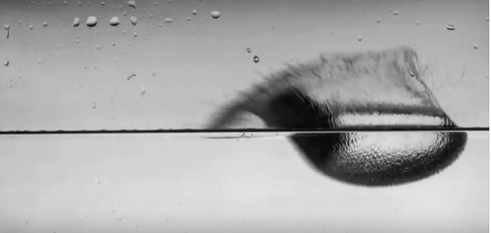
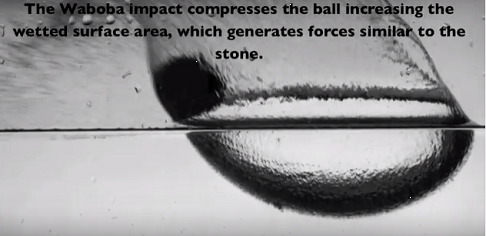
So how does it work? Unlike balls that are rigid and inflexible, the Waboba will deform and flatten when subjected to a compressive force. When a ball is thrown at a shallow angle into the water, it generates a depression in the water as the entrance force ejects water out of the flat layer. If the ball is inflexible, it will present a small surface area to the backside of the depression in the water, causing the ball to penetrate into the water and eventually sink. A flat stone, on the other hand, presents a larger surface area, allowing the stone to plane on the backside of the water depression and fly out of the depression.
The Waboba enters the water as a spherical ball, but then flattens as the compressive forces generated by the kinetic energy of the thrown ball being counteracted by the resistance of the water. The flattened ball then behaves like the flat stone, and planes out of the water depression. The designers of the Waboba needed to work out the proper range of compressive properties. Interestingly, the harder the ball is thrown into the water, the more it should flatten and hence achieve greater planing behavior.
This important research was conducted 5 years ago by Tadd Truscott, a professor at BYU, who clearly recognized the critical need of explaining why, from strict engineering principles, toys are fun. Videos of Dr. Truscott’s work can be found here, with stills from the video shown below.
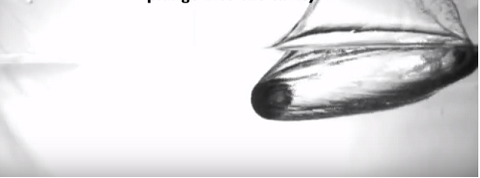
Stone entering water, creating depression.
The stone rides up the back of the depression and flies out.
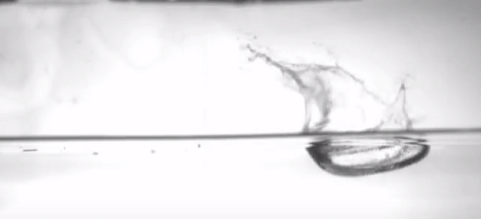
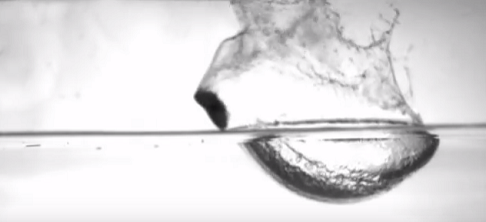
A rigid ball entering the water, creating a depression.
The smaller surface area pushes the ball deeper into the water.
Waboba entering the water, flattening under the compressive force of the ball hitting the back of the water depression.
The Waboba exiting the water depression and resuming its more spherical shape.
Posted by Cambridge Polymer Group on | Comments Off on Who You Gonna Call?
It isn’t only Ghostbusters that have to worry about being slimed! Last Friday, chaos ensued when 3,400 kg of hagfish were accidentally deposited on a highway in Oregon.
This slimy traffic accident reminded us of work we performed a few years ago in collaboration with Prof Douglas Fudge on understanding quite what is going on when these animals are disturbed. These evolutionary throwbacks are generally considered the vultures of the deep sea, feeding off carcasses and debris at the bottom of the ocean. Their skin is often used as a faux eel-skin, but to an engineer the most fascinating aspect of this animal is the slime it produces. When attacked, the animal responds by generating copious amounts of slime; although relatively small animals, they can generate gallons of gel almost instantaneously.
It turns out these animals have evolved this spectacular defense based on two physiological components. There are 150-200 slime glands spaced along the body of the animal. In each gland are thread cells of about 150 microns in size, but composed of a single wrapped 1-3 micron filament that is 10 -20 cm long. Along with this cell are high molecular weight mucous glycoproteins in vesicles. These components expand rapidly upon exposure to water; the vesicles provide an elastic gel-like matrix, while the fibers entangle and hold the gel together.
We performed rheology on hagfish glycoproteins in an attempt to understand the assembly and gelation mechanisms (presented at the Society of Rheology in 2003) with evidence of a yield stress and elasticity, and a strong salt influence. In the end though, perhaps the most interesting aspect is the manner in which the hagfish clears itself – it simply ties itself in a knot and “slides” the gel off itself.
Posted by Cambridge Polymer Group on | Comments Off on Phoenicopterus Ruber Plasticus
We are approaching the 60th anniversary of a very important milestone that coupled the unpresuming plastic industry with the world of kitsch: the development of the pink plastic lawn flamingo. The lawn flamingo was invented by the appropriately and presciently-named Donald Featherstone. Mr. Featherstone, after graduating from the Worcester Art Museum, took a job with a plastic lawn ornament manufacturer in Leominster, MA, a town 1 hour from Cambridge Polymer Group’s headquarters. Leominster has a long history in plastic production, earning the nickname ‘Comb City’ based on its production of celluloid-based combs in the late 1800s. Injection molding also got its start in Leominster, pioneered by Samuel Foster, who made, amongst other items, injection molded sunglasses that go by the name ‘Foster Grants’. Lastly, Leominster can claim to be the home of Tupperware, the happily burping container system still in vogue.
So pink plastic lawn flamingos were a natural fit for Leominster. Fittingly, Mr. Featherstone received an Ig Nobel Prize for his work in 1996, an award that celebrates both invention and humor, with a smattering of sarcasm. As an interesting aside, Mr. Featherstone and his wife wore matching outfits for 35 years; not terribly relevant, but interesting. Although Mr. Featherstone left this mortal coil in 2015, we are comforted knowing the world he left is a bit pinker and more plasticky. The flamingos continue to appear in modern culture and on the bolder homeowner’s lawn. Students at the University of Wisconsin were treated to the sight of over 1000 plastic flamingos adorning Bascom Hill on campus in 1979, courtesy of the student government. This event prompted Madison, WI, home of the UW campus, to name the lawn flamingo its official bird in 2009.
So join the plastics world in thanking Mr. Featherstone for this unassuming but important contribution.
Posted by Cambridge Polymer Group on | Comments Off on Developing a Thicker Skin
Development of synthetic tissue models has been gaining speed over the past decades as materials, designs, and processing techniques have become more sophisticated. Polyurethane and silicone organ models adorn the desktops of many scientists and physicians, and serve as useful anatomical images and guides. For actual surgical technique development and training, these rigid materials sometimes do not accurately replicate the behavior of biological tissue. Alternative materials, most notably hydrogels, can function well in this role. The highly hydrated nature of hydrogels can give them the feel, elasticity, and cutting behavior of native tissue, and they can often be prepared in form factors that mimic the native organs. CPG has been developing custom tissue models for over 20 years for clients based on its proprietary hydrogel formulations.
Skin is a challenging organ to model, since it has unusual elasticity and frictional behavior when compared to other tissues, such as muscle and fat. Beyond just mechanical behavior, researchers are keenly interested in skin models that help assess biological safety requirements. The standard approach for biological safety is normally an animal model (rat, rabbit), but public resistance to animal testing has pushed for development of non-animal based models. L’Oreal is using additive manufacturing techniques to make films of skin models derived from human keratinocytes, producing a model that is histologically similar to the human epidermis. Intended to allow L’Oreal to test their skin products, the EpiSkin™ model is proposed for tests in involving irritation, UV exposure, DNA damage, and other parameters.
A company local to Boston, MatTek, has also been producing EpiDerm™ skin models for several years by culturing human keratinocytes.
These technologies present an exciting platform for reproducible, clinically-relevant skin testing without the need for animal models.