Posted by Cambridge Polymer Group on | Comments Off on Case Studies
Throughout our history, we have worked on a variety of interesting projects for our clients and our own internal research. Projects have included cleaning systems for ships, hydrogels for biomedical applications, psychorheology of food products, and synthetic tissue models. We have posted case studies on our web site for prospective clients to see the range of projects on which we have worked. Click here to go to our case studies.
Posted by Cambridge Polymer Group on | Comments Off on Workshop on Reprocessing Re-Usable Medical Devices
On June 9-8, 2011, the FDA hosted a workshop to discuss issues involved in the re-processing of re-usable medical devices, such as endoscopes and orthoscopic shavers. The purpose of the workshop was to establish what guidance documents should be established to ensure that reusable devices are being properly cleaned and disinfected/sterilized to ensure patient safety. Representatives from hospitals, regulatory, reprocessors, OEMs, and testing labs discussed the state of instructions for use, cleaning testing and validation, and the risks associated with poor cleaning.
Cambridge Polymer Group presented the most recent work performed at ASTM on standards targeted towards improving medical device cleanliness, and participated in a panel discussion of what future standards will be required.
The archived webcast of the conference can be found on the FDA website. A summary of the discussion can be found here.
CPG presentation on ASTM activities in Medical Device Reprocessing
Posted by Cambridge Polymer Group on | Comments Off on Potential Detection System for Implant Wear
Researchers at the University of Nebraska Medical center recently published their results of a study in which they developed an optical imaging agent to detect inflammation due to wear debris generated from implants. In this study, a N-(2-hydroxypropyl)methacrylamide (HPMA) copolymer-based optical imaging contrast agent (P-IRDye) was developed and used for the detection of wear particle-induced inflammation employing a murine calvaria osteolysis model. The particle-induced osteolysis of calvaria was evaluated by H&E, tartrate-resistant acid phosphatase (TRAP) staining and μ-CT after necropsy. One-day post particle implantation, P-IRDye was administrated to the mice via tail vein injection. Live imaging of the animals 6 days after implantation revealed the preferential distribution and sustained retention of the macromolecular contrast agent at the site of particle implantation. Immunohistochemical staining and FACS analyses of the calvaria-associated soft tissue revealed extensive uptake of the HPMA copolymer by F4/80, Ly-6G (Gr1) and CD11c positive cells, which accounts for the retention of the macromolecular probes at the inflammatory sites.
Posted by Cambridge Polymer Group on | Comments Off on Design for Cleaning
The FDA has issued a mandate to manufacturers of re-usable medical devices to design with re-cleaning of the these devices in mind. This mandate is in response to an on-going effort to reduce the risk of infection, contamination, or disease transmission due to improperly cleaned devices. Device design should include smooth interior surface, avoidance of sharp corners and blind spots, as well as easy disassembly for cleaning. Material choice should be selected with reprocessing in mind.
Posted by Cambridge Polymer Group on | Comments Off on Metal-On-Metal Hip Implants
The on-going discussion of patient response to metal-on-metal hip implants has recently increased. For the past few years, papers presented at ORS and AAOS have discussed concerns about tissue response to metal ions and debris liberated from wear in metal-on-metal hip implants. These articles allege that the metal ions can result in pseudo-tumors in some patients. The FDA has recently requested that all orthopedic manufacturers who produce a metal-on-metal (MOM) implant conduct clinical studies on patients who have received a MOM implant. A NY Times article discusses the nature of this request. A recent NPR story also talks about issues with MOM, and Depuy’s recent recall of their ASR system.
Posted by Cambridge Polymer Group on | Comments Off on The FDA Will Be Hosting a Public Workshop on the Reprocessing of Reusable Medical Devices
The FDA will be hosting a public workshop on the Reprocessing of Reusable Medical Devices on June 8th and 9th, 2011 in Silver Springs, MD. The purpose of the workshop is to discuss factors affecting reprocessing quality, device design as it relates to reprocessing reusable medical devices, reprocessing methodologies, validation methodologies, healthcare facility best practices, and FDA’s plans to address the identified issues. CPG researcher Stephen Spiegelberg is an invited speaker at the workshop. Further information and registration details can be found here.
Posted by Cambridge Polymer Group on | Comments Off on The Next ASTM Meeting for Medical Device Development (Committee F04)
The next ASTM meeting for medical device development (Committee F04) will be meeting from May 15-17th, 2011, in Anaheim, California. This meeting will focus on ASTM standards development for the characterization of UHMWPE, PEEK, and other biomedical plastics, as well as testing protocols for medical devices and cleanliness of medical devices. Contact Cambridge Polymer Group for more details, or visit the ASTM web site.
Posted by Cambridge Polymer Group on | Comments Off on Medical Grade Polymers 2011
The Medical Grade Polymers 2011 conference will take place September 13 – 14, 2011 at the Hilton City Avenue in Philadelphia, Pennsylvania, United States. The program will have papers from top medical device manufacturers and polymer suppliers, including details of high performance implantable materials, coatings, cardiovascular devices, antimicrobials and hygiene, and many other topics.
Cambridge Polymer Group researcher Stephen Spiegelberg will be presenting a paper on the use of antioxidants in medical grade thermoplastics.
Posted by Cambridge Polymer Group on | Comments Off on Cement Extrusion Tester
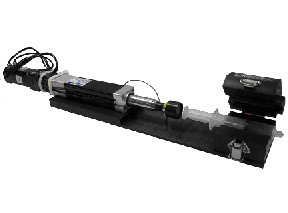
Measurement of cement curing kinetics is critical for both R&D and quality control, but has traditionally required use of either complex and costly rheometers or highly variable qualitative tests for handling characteristics. The new Cement Extrusion Tester (CET), designed by engineers at Cambridge Polymer Group, provides accurate curing kinetics data and quantitative determination of handling characteristics from a single, rapid test.
Designed for analysis of PMMA bone cement, the CET can provide accurate viscosity data for any reacting system with viscosity in the range of 50-5000 Pa*s, including: