Posted by Catherine Cerasuolo on | Comments Off on From Forest Floor to Food Wrap: Turkey Tail Mycelium at the Frontiers of Polymer Science
By early December, most Thanksgiving turkeys have migrated to stock pots and storage containers, but in forests across New England and beyond, turkey tail (Trametes versicolor) spreads over fallen logs in familiar bands of brown and cream. It draws attention less for its resemblance to the holiday bird than for its polymer-rich tissues that enable distinct biological and materials behaviors.
This deceptively simple shelf fungus is packed with complex polysaccharides and mycelial networks that inspire new approaches to immune‑modulating ingredients and bio‑based coatings, right at the intersection of biology and materials science that Cambridge Polymer Group’s clients navigate every day.
Polymers In A Mushroom: PSK, PSP And β‑Glucans
Turkey tail cell walls are rich in high molecular weight polysaccharide-peptides such as PSK (polysaccharide‑K) and PSP (polysaccharopeptide), which combine branched glucan backbones with peptide components. These macromolecules appear to work as a biological response modifier interacting with pattern recognition receptors (for example, Toll‑like receptors) and can modulate cytokine production, natural killer cell activity, and other immune pathways in preclinical and clinical studies.[1][3]
In Japan, a standardized PSK extract from T. versicolor has been used as an adjunct to conventional chemotherapy, and clinical data suggest effects on survival and quality‑of‑life endpoints in several solid tumors. [2] PSP and related fractions are under investigation for similar immunotherapeutic roles and for their ability to influence immune checkpoints and tumor microenvironments.[3]
Gut Microbiome And Prebiotic Effects
Like other fungal polysaccharides, turkey tail fractions behave as fermentable fibers for the gut microbiota, supporting short‑chain fatty acid production and enrichment of beneficial genera such as Lactobacillus and Bifidobacterium in experimental models. Reviews of fungal polysaccharides highlight their potential to modulate gut barrier integrity, systemic inflammation, and metabolic parameters via microbiome shifts, positioning turkey tail as a candidate prebiotic ingredient.[4]
For medical device and drug‑delivery developers, these data illustrate how specific polymer architectures (branching, peptide content, charge) translate into measurable biological responses in mucosal environments. Understanding these structure–function relationships is directly relevant when designing synthetic or semi‑synthetic hydrogels, coatings, and excipients intended to engage the same receptors and tissues.
Mycelium Coatings As Plastic Wrap Alternative
Recent work from University of Maine researchers has shown that turkey tail mycelium, combined with cellulose nanofibrils from wood pulp, can form thin, continuous coatings on paper, textiles, and wood. After several days of controlled growth and a heat‑treatment step, the resulting layer is food‑safe, biodegradable, and resistant to penetration by water, oils, and organic solvents such as n‑heptane and toluene.[5]
This “grown” coating behaves like a bio‑based barrier film, suggesting pathways to replace petroleum‑derived plastic wraps and cup linings. For packaging and materials engineers, it represents a living polymer processing route in which mycelial hyphae and fibrillated cellulose self‑assemble into a functional composite at low temperature and with renewable feedstocks.
Relevance For Medical And Industrial Polymers
From a polymer science perspective, turkey tail offers three complementary case studies.
Immunoactive polysaccharide–peptides illustrate how subtle changes in glycan composition and peptide content shift receptor binding and downstream signaling, informing the design of bioactive coatings, adjuvants, and drug carriers.
Prebiotic effects on the microbiome demonstrate that “inert” excipients can have system‑level consequences, a key consideration for oral devices, controlled‑release matrices, and combination products.
Mycelium–cellulose coatings show how fungal growth can be harnessed as a fabrication step for barrier layers and biocomposites, pointing to future opportunities in sustainable packaging, tissue‑compatible substrates, and low‑impact foams.
As companies look to align product development with circular‑economy and ESG goals, bio‑derived polymers like those from Trametes versicolor highlight how materials design, biology, and regulatory science intersect. Cambridge Polymer Group can support clients in this space through characterization of bio‑based coatings and composites, structure–property testing of novel polysaccharide systems, and guidance on test strategies for biocompatibility and degradation under relevant standards.
[1] Standish LJ, Wenner CA, Sweet ES, et al. Trametes versicolor mushroom immune therapy in breast cancer. J Soc Integr Oncol. 2008;6(3):122–128. Available at: https://pmc.ncbi.nlm.nih.gov/articles/PMC2845472/
[2] PDQ Integrative, Alternative, and Complementary Therapies Editorial Board. Medicinal Mushrooms (PDQ®): Patient Version. National Cancer Institute; updated July 11, 2024. Available at: “How Two Document Examiners Solved the Case of the Salamander Letter.” https://www.ncbi.nlm.nih.gov/books/NBK424937/
[4] Barcan AS, Barcan RA, Vamanu E. Therapeutic potential of fungal polysaccharides in gut microbiota regulation: implications for diabetes, neurodegeneration, and oncology. J Fungi. 2024;10(6):394. doi:10.3390/jof10060394. Available at:https://pmc.ncbi.nlm.nih.gov/articles/PMC11204944/
[5] Zier S, White LR, Johnstone D, et al. Growing sustainable barrier coatings from edible fungal mycelia. Langmuir. 2025;41(39):26751–26759. doi:10.1021/acs.langmuir.5c03185. Available at: https://doi.org/10.1021/acs.langmuir.5c03185
Posted by Dr. Stephen Spiegelberg on | Comments Off on The Chemistry Behind the Perfect Roast: Understanding the Maillard Reaction
Every time you roast a turkey or bake bread, a fascinating chemical reaction gives your food its rich brown color, enticing aroma, and complex flavors. That reaction is called the Maillard reaction (pronounced my-ard), a cornerstone of both food chemistry and polymer science.
What Is the Maillard Reaction?
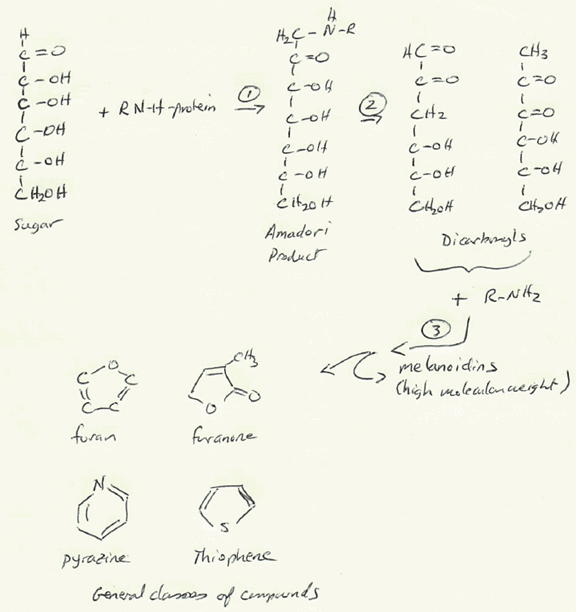
The Maillard reaction occurs when amino acids (from proteins) react with reducing sugars at temperatures above about 140 °C. It is not a single reaction, but a chain of them that unfolds in three general stages: initial, intermediate, and final.
Initial reaction: Carbonyl groups from sugars react with amino groups from amino acids to form Amadori products, also known as glycated proteins.
Intermediate reaction: These products break down into smaller molecules such as reduced sugars, dicarbonyls, and additional amino compounds.
Among the many products of the Maillard reaction are melanoidins, a group of high-molecular-weight nitrogen‑containing polymers that give foods their brown hues. Their structures vary depending on the starting sugars and amino acids but generally include heterocyclic rings such as pyrroles, furans, and pyridines linked to a carbohydrate backbone.
These same compounds are responsible for the characteristic color of roasted coffee, seared steaks, and baked bread. Melanoidins and other Maillard products also create the familiar flavor molecules that chefs prize:
Pyrazines: roasted or toasted notes
Thiophenes: rich, meaty flavor
Furanones and furans: sweet, caramelized aroma
Oxazoles and pyrroles: nutty or sweet nuances
Beyond the Maillard Reaction: Myoglobin and Color
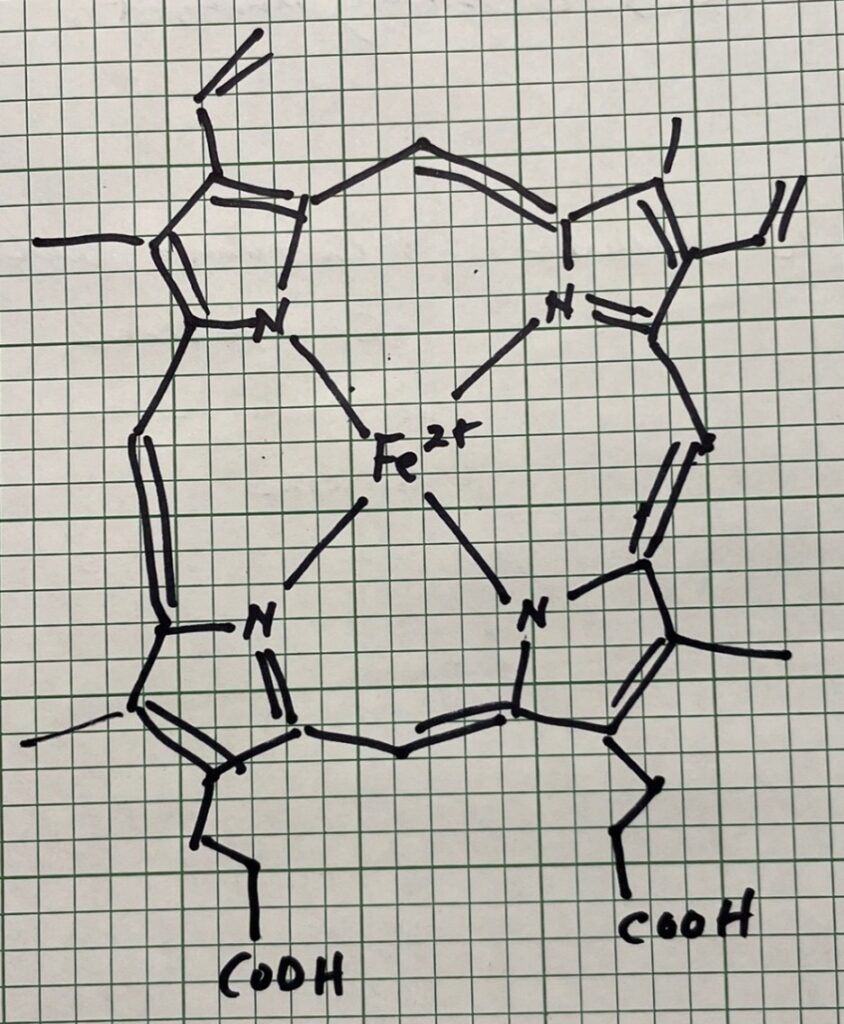
Not all browning in cooked meat comes from the Maillard reaction. Another source of the brown color is myoglobin, composed of 150 amino acids found in the muscle tissue of vertebrate animals (see Figure 2) and is used to store oxygen in muscles. Myoglobin has four pyrrole nitrogens that surround a ferrous ion center, as shown below. As meat heats, the heat denatures the protein and the myoglobin. This transition occurs much lower than the Maillard reaction (of the order of 60 °C) and is the driving force for the bulk color change that allows determination of “doneness” in red meat since the form of the converted myoglobin governs the final color of the molecule.
Figure 2: Myoglobin
How the Maillard Reaction Differs from Caramelization
The Maillard reaction should not be confused with caramelization, which involves the direct pyrolysis (thermal breakdown) of sugars without amino acids. Both processes create brown color and complex flavors, but they arise through distinct chemical pathways.
Let’s Talk Turkey: Maximizing the Maillard Reaction
When it comes to roasting a turkey, harnessing the chemical reactions involved in cooking makes all the difference in flavor and appearance. Here are a few science-backed tips:
Dry the surface. Removing excess moisture by blotting helps the turkey brown more quickly.
Use moderate alkalinity. Raising the surface pH with a small amount of baking soda encourages the Maillard reaction.
Maintain high heat. A roasting temperature above 140 °C ensures the reaction proceeds effectively.
Control heating rate and conditions. Although not relevant for surface browning, the rate of heating, and the oxygen environment (oven versus barbeque) can impact the color of the meat in the way that the myoglobin is degraded.
So do you need to be a chemist to cook a turkey? Thankfully, the answer is no, as all these reactions occur naturally just by cooking the turkey at the appropriate temperature and for the appropriate duration of time. However, when the author of this blog post was a graduate student in MIT’s Chemical Engineering department, the department secretaries received several phone calls every November from amateur chefs asking questions about how to cook their turkeys. The standard response from the secretaries? “Let us connect you to the Chemistry department.”
Posted by Catherine Cerasuolo on | Comments Off on ASTM F04.15.17 Workshop Highlights Advancing Standardization in Medical Device Cleaning
The ASTM Committee F04.15.17 on Medical Device Cleaning recently held a workshop focused on the analysis of cleaning agents used for both new and reusable medical devices. The goal was to identify key topic areas requiring standardization to help ensure the development of safe, effective, and well-characterized products across the medical device industry.
The morning sessions opened with an overview of current standards for clinically used devices, such as endoscopes and surgical instruments, presented by Ralph Basile (Healthmark). Subsequent talks explored strategies for identifying manufacturing residues, addressing worst-case cleaning challenges, and defining product grouping considerations, with contributions from Ben Grosjean (Zimmer), Ramanthan Dhakshinamoorthy (Procept BioRobotics), and Sarah Frank (Johnson & Johnson).
Jeff Phillips (Alconox) and David Ruiz (Agilitti Health) led discussions on detergent composition and its impact on cleaning performance. Several presenters then examined analytical methods for evaluating cleaning agent residues, including:
Analysis of volatile compounds by Brian Bosso (Steris)
Spectroscopic techniques by Mayuri Kasareni (Intuitive Surgical)
Chromatography methods by Stephen Spiegelberg, Mimoza Xheka, and Becky Bader (Cambridge Polymer Group)
Alex Freeman (Intuitive Surgical) and John Howell (Novonesis) discussed how cleaning agents interact with biological tissues, while Rob States (Cormica) presented case studies illustrating failure analyses linked to improper cleaning protocol implementation.
The workshop concluded with a panel discussion led by conference chairs Alpa Patel, Kaumudi Kulkarni, and Barbara Kanegsberg, summarizing key takeaways and identifying areas for future standardization work.
Key Insights and Next Steps
Detergent efficacy testing: A standardized approach is needed to enable meaningful comparison of cleaning agent performance.
Unknown composition risks: Common test methods and risk assessment frameworks should be developed to address cleaning agents with partially disclosed or proprietary formulations.
Healthcare facility engagement: Greater collaboration with healthcare providers is essential to ensure that clinical cleaning processes meet appropriate standards. Currently, most healthcare facilities are not involved in ASTM or ISO initiatives focused on cleaning and are not subject to FDA regulation in this area. The committee plans to explore ways to involve this community more directly in future standardization efforts.
Posted by Catherine Cerasuolo on | Comments Off on Why Getting Material Selection Right Matters in Medical Device Design Live Event
Selecting the right material from day one can make or break a modern medical device.
Join Cambridge Polymer Group for “Getting Material Selection Right the First Time” with industry leader Dr. Gavin Braithwaite on November 12, 2025, at 2:00pm EST.
Medical device development today is a balancing act. Teams must juggle evolving regulations, rapid market shifts, and manufacturing constraints, all before the device ever leaves.
Relying solely on conventional specification sheets or historical precedent carries serious risks, especially as design iterations speed up and requirements become more complex. Dr. Braithwaite will use orthopedic implants as a historical lens to show how early material decisions impact long-term safety and performance.
Pressures Shaping Medical Device Design
Material selection isn’t just about picking what’s familiar. Teams must consider:
• New regulatory hurdles, such as PFAS restrictions in the EU.
• Market pressures, such as on-shoring or additive changes.
• Changing sterilization trends, including demand for alternatives to ethylene oxide.
• The impact of miniaturization on material integrity and performance.
• The novel challenges posed by degradable polymers, hydrogels, and bio-compatible formulations.
Avoiding Costly Mistakes
Insights from Cambridge Polymer Group’s consulting work highlight recurring pitfalls:
• Failing to involve material science experts early in development can lead to delays, recalls, and design reboots.
• Overlooking the value of early material vetting leaves smaller companies exposed to unforeseen costs.
• Horror stories abound of late-stage changes forcing teams to restart validation or compromise time-to-market.
Industry Voices: Best Practices for Selection
Drawing on industry best practices:
• Material selection must begin at the earliest stages, not after a prototype is built.
• Design teams must collaborate closely with regulatory, manufacturing, and materials science specialists.
• Consider a material’s regulatory status, biocompatibility, mechanical properties, and manufacturability together, not in isolation.
• Maintain flexibility; if forced to pivot late, engage cross-functional teams and expert partners to minimize risk.
Cambridge Polymer Group works with OEMs of all sizes to:
• Anticipate and navigate regulatory and market changes.
• Advise on specialist materials for degradable, hydrogel, and combination devices.
• Streamline material vetting, ensuring projects stay on timeline and budget.
Register for the Live Event
Tap into Cambridge Polymer Group’s expertise and join Dr. Braithwaite for actionable guidance on November 12. Get ahead of the curve and learn how leaders in the industry approach “Getting Material Selection Right the First Time.”
Reserve your seat and be prepared to ask the questions that will get your device to market, fast, safe, and compliant.
Posted by Catherine Cerasuolo on | Comments Off on Bridging the Gap in Material Science Expertise: Explore the New Campoly.com
We are excited to unveil the new campoly.com, the redesigned digital home for Cambridge Polymer Group, Inc. (“CPG”)! This launch marks a major milestone in our commitment to providing advanced contract testing, research, and development services in material science for clients across all industries, with particular emphasis on healthcare.
Why We Redesigned
Over the past 30 years, CPG has grown into a trusted partner for clients spanning medical devices, consumer products, industrial manufacturing, and beyond. Our expanding material science expertise demanded a website that reflects both the depth of our team’s experience and the breadth of our capabilities. The new campoly.com is designed to offer a seamless experience for prospective and returning clients, researchers, and industry partners.
What’s New on campoly.com
Improved Navigation: The new site’s intuitive menu structure makes it easy to find information about our contract research, material development, and testing services.
Expanded Resources:Explore our content across all our disciplines and navigate through our updated blog and publications to stay informed on the latest materials science trends and innovations. No paywalls here!
Team & Expertise: Get to know CPG’s world-class team of PhD scientists and engineers and discover how our subject matter experts guide complex polymer-based projects from concept to commercialization.
Client-Centered Support: Quickly access details on submitting samples, requesting quotes, or collaborating on custom projects, with direct links to our contact page and streamlined forms.
Enhanced Client Collaboration
Our new website embodies Cambridge Polymer Group’s client-first approach by making our suite of services more accessible than ever. As we continue to innovate in materials development, testing methodologies, and scientific consulting, the revamped campoly.com serves as an essential touchpoint for project inquiries and knowledge sharing.
Have questions, or want to discuss your next project? Reach out via our contact page—we’re ready to help accelerate your success through polymer science.
Posted by Dr. Stephen Spiegelberg on | Comments Off on From Residues to Risk: Why Medical Device Cleaning Validation Matters in Biocompatibility Assessments
Ensuring medical device safety requires a coordinated approach across three critical domains: biocompatibility, cleanliness, and sterility. While each area has its own regulatory and testing requirements, they are deeply interconnected. Overlooking the relationship between these elements can increase patient risk and delay product approvals. This upcoming medical device webinar explores how cleaning validation influences biocompatibility outcomes and overall product safety.
Cleaning validation is a foundational step in establishing device safety. Surface contaminants left from manufacturing or cleaning processes can directly impact biological evaluation results and compromise sterility assurance. Similarly, certain sterilization methods can alter material chemistry, generating new extractables or leachables that affect the device’s biocompatibility profile.
When designing and validating a medical device, both manufacturers and regulators should consider:
Cleanliness addresses surface residues, which can directly influence biological evaluation results. It’s also essential to achieving reliable sterilization assurance.
A sterile medical device may not necessarily be biocompatible; sterilization methods can alter chemical properties relevant to biological safety.
Devices can meet cleaning and sterility standards but still fail biocompatibility due to material selection or design factors.
Even if a device is determined to be biocompatible post-manufacture, poor cleaning or sterility assurance can compromise clinical performance and patient safety.
Join our webinar, From Residues to Risk: The Role of Cleaning Validation in Biocompatibility Assessments, on October 15, 2025, 2 p.m. ET, to learn how cleanliness, sterilization, and biocompatibility testing intersect during medical device validation. Our experts will highlight best practices for integrating cleaning validation into biocompatibility assessment plans, review regulatory expectations, and provide actionable strategies to minimize risk while ensuring compliance with ISO 10993 and related standards.
Posted by Dr. Stephen Spiegelberg on | Comments Off on Hydrogel Water Beads: For Farming Use Only
What Are Water Beads?
“Water beads” are water-absorbent polymer beads that can swell over several hundreds of times their initial dry mass when placed in water, forming hydrogel beads. They are primarily marketed as agricultural products to act as humectants in soil, helping retain and slowly release water into the soil.
Beyond farming, however, water beads have been marketed as colorful sensory toys for play and decoration. This non-agricultural use has raised safety concerns, especially when the beads are accessible to young children who may accidentally ingest them.
What Are the Hazards of Water Beads?
A 2025 case study, published in Pediatrics, documented a 13 month-old who was admitted to the emergency room after a 12 hour stint of vomiting and lethargy[1]. She presented as dehydrated, abdominal distension and tenderness. A radiograph and ultrasound showed a mass in the small intestine, which a laparotomy confirmed to be swollen fragments of water bead material.
The mass was removed, which resulted in partial recovery. The patient continued to show developmental symptoms, and 9 months after the initial mass was removed, a colonoscopy revealed inflammation of the ascending and sigmoid colons and additional gelatinous fragments consistent with water bead material. The patient’s motor skills and speech skills required early childhood intervention. This case underscores the risk of intestinal obstruction and possible neurotoxic effects associated with water bead ingestion.
What Are Water Beads Made Of?
The study author noted that some manufacturers claim the sensory toy water beads are made exclusively of sodium polyacrylate, which is the salt form of polyacrylic acid, a common hydrogel often used as the sorbent in diapers. However, characterization testing performed by Cambridge Polymer Group scientists showed that commercially-available water beads procured by the author and sold as sensory toys, found they were predominantly comprised of polyacrylamide, which is synthesized from acrylamide monomer. Polyacrylamide has a different toxicological risk profile than polyacrylate and hence needed additional scrutiny for its use as a toy.
What Is the Current Regulation on Water Beads?
The lead author of the 2025 study collaborated with the Consumer Product Safety Commission (CPSC) to highlight the risks posed by these products. The CPSC’s own testing of 14 water bead toy products revealed:
Detectable residual acrylamide monomers in most products
Two products exceeding acute oral minimum risk levels
Significant batch-to-batch variability in monomer content
To protect consumers, the CPSC launched public guidance warning parents not to allow children to play with water beads[2]. On August 21, 2025, the Commission approved a new federal safety standard regulating water bead toys. The standard imposes two major restrictions:
Limits on permissible concentrations of polyacrylamide
Rules on maximum allowable bead size when fully swollen to reduce choking and intestinal obstruction risks[3]
What Is Next?
Water beads may have benefits in farming, but as toys, they present serious risks. With new safety standards in place and ongoing research, regulatory science is catching up to protect the most vulnerable consumers.
At Cambridge Polymer Group, we continue to work with companies to characterize the chemical composition of hydrogel materials in consumer products. Our goal is to help ensure these materials are safe, compliant, and effective—whether in agricultural settings or other approved applications.
If your company is working with hydrogels—whether for consumer products, agriculture, industrial, or medical applications—Cambridge Polymer Group can help. From material characterization and performance testing to product development and risk assessment, our scientists provide the insights you need to innovate with confidence. Connect with us to see how we can support your next project.
[1] Haugen A, Friedman E, and Duff I. Intestinal Obstruction and Neurotoxicity Associated With Water Bead Ingestion. Pediatrics. 2025;155(2): e2023065575
When a product unexpectedly fails, performs below expectations, or does not meet safety standards, the cause often lies deep in the materials—or even in trace contaminants—you never knew were there. That’s where material deformulation becomes essential. Rather than building a product from scratch (formulation), deformulation is the investigative process of analyzing an existing material to reveal all its ingredients: base polymers, additives, surface treatments, and even subtle residues from manufacturing.
This deep analysis serves several vital roles: it helps identify the sources of product failure, clarifies why a competing product works better, and offers confidence when switching suppliers or moving manufacturing in-house.
Why Deformulation Matters
Reveals sources of product failures and performance issues, leading to actionable troubleshooting and improvement.
Allows teams to benchmark their products against competitors and discover what drives superior performance elsewhere.
Validates the composition of materials for regulatory compliance and safety assurance.
Enhances quality control by unveiling undisclosed changes or process-introduced impurities.
Supports innovation and cost optimization by uncovering reformulation opportunities or substitute ingredients.
What You’ll Learn
This webinar will introduce the fundamentals of material deformulation—what it is, why it matters, and how it empowers manufacturers to tackle complex material problems. Attendees will discover the main analytical tools of deformulation]. The session will explain how these techniques lead to a comprehensive breakdown of materials and how the resulting insights can help teams reduce risk, troubleshoot failures, design safer products, and improve consistency.
Real-World Case Studies
Dr. Kalpana Viswanathan will share examples of how deformulation made a tangible difference for clients:
Uncovering a Mystery Ingredient: Identifying and characterizing a hidden component in a processing aid, which enabled clearer specifications and better performance in future production.
Benchmarking Against a Competitor: Diagnosing the cause of superior tensile strength in a competitor’s sample, including differences in crystallinity, fillers, and processing—leading to recommendations for improvement.
Solving Safety Testing Failures: Tracing a failed cytotoxicity test to a specific contaminant, troubleshooting its source, and helping the client implement an effective mitigation plan.
Understanding Syringe Cracking: Identifying unreacted epoxy monomer and process variability as root causes of product defects, along with best practices for handling and assembly.
About the Speaker
Dr. Kalpana Viswanathan is a seasoned polymer chemist with over ten years of research and development experience. Her portfolio includes pioneering coatings for implantable medical devices and recent work supporting medical device materials. She holds a U.S. patent in plasma bonding technology and is experienced in hydrogel synthesis, surface modification, biocompatible materials, and comprehensive material characterization. Dr. Viswanathan’s work bridges cutting-edge scientific discovery and practical problem-solving for safer, more effective products.
Why Attend
Whether you’re in medical devices, pharmaceuticals, or consumer products, hidden material risks can undermine your product just when you least expect it. This webinar will demonstrate how material deformulation unveils the real causes of product challenges and equips teams with practical solutions.
Register today to secure your spot and gain practical strategies for uncovering the unseen in your products.
Posted by Joseph White, Ph.D. on | Comments Off on There’s More to Cutting Tissue Than You Think
In medical device development and surgical training, having a suitable test environment is essential for screening device concepts and reliably training surgeons. Traditionally, this process relied on excised animal or human cadaveric tissue—but the use of such tissue is problematic from both ethical and practical perspectives, including issues with stability and variability.
Hydrogel systems now offer a promising alternative: they are ethical, reliable, and mass-producible tissue models, thanks to their wide range of potential material properties. Yet, matching hydrogel properties to natural tissue is no trivial feat. Consider the simple act of cutting tissue with a scalpel: what mechanical properties are needed to achieve the correct cutting “feel”?
The Hidden Complexity of Tissue Cutting
Cutting tissue with a scalpel is a surprisingly complex process, involving a delicate balance of mechanical and rheological behaviors, as well as the natural inhomogeneity of tissue. Because many tissues and organs are non-uniform, accurate mechanical testing is challenging. The most common property reported in the literature is modulus—typically in compression—but this alone cannot capture the complexity of real tissue.
Cutting is fundamental to surgical procedures, whether using a scalpel or more advanced techniques like radiofrequency ablation, laser cutting, or electrocautery. To ensure effective surgical training and device prototyping, it is crucial to replicate the appropriate “feel,” or psychorheology, of cutting natural tissue.
Beyond Modulus: The Role of Fracture Resistance and Lubricity
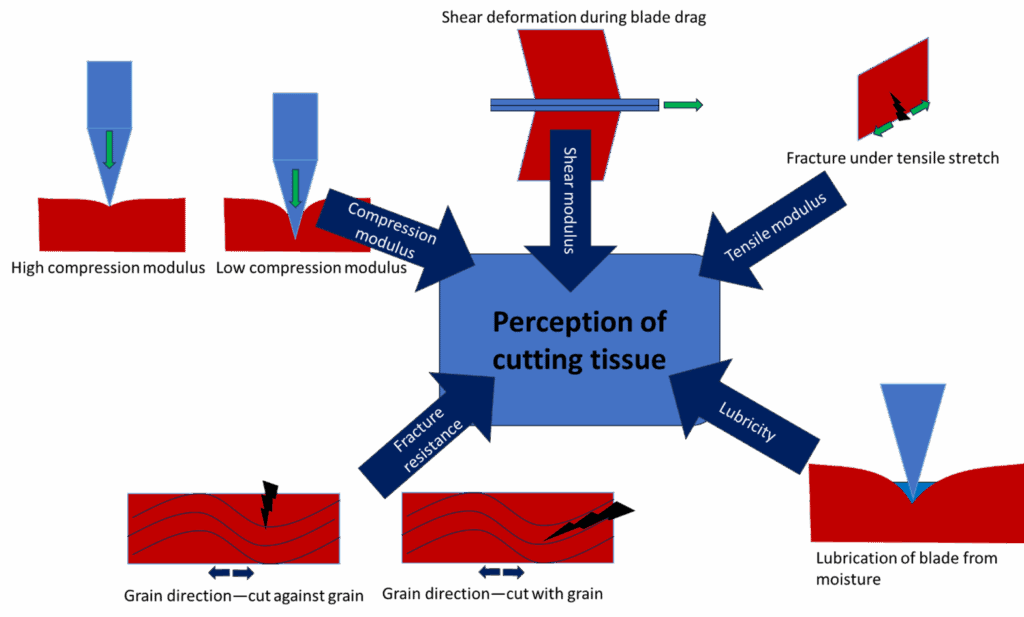
When a scalpel cuts into tissue, modulus is important, but it is not the only factor influencing the cutting experience. The process begins with the compression of tissue under the blade, followed by the slicing motion and ultimately the separation of tissue. The initial contact is characterized by the compression modulus: soft tissues like lung or brain may be difficult to cut due to excessive compression, while firmer tissues like cartilage or skin provide a more stable feel.
However, compression modulus alone is insufficient to predict or mimic the cutting experience. Another critical factor is the tissue’s resistance to stretching and tearing. Imagine cutting through chicken or steak: as the blade moves, the tissue is stretched (in tension and shear) until it fractures. The cutting feel depends on whether the cut is made with or against the grain.
Muscle tissue, for example, contains a fibrous network. Along the fiber direction, it is harder to stretch; perpendicular to the fibers, stretching is easier. Compression, tensile, and shear moduli all contribute to the overall cutting feel.
Cutting with the grain is generally easier, as the blade can slip between fibers to slice through softer tissue, which has lower fracture or tear resistance. Most natural tissues have a fibrous network that prevents catastrophic tear propagation—this is crucial, as it means small nicks do not become life-threatening tears.
Most natural tissues are moist and/or contain oils. The lubricity—how easily the blade moves—is affected by the presence of fluids like blood or fatty oils. If tissue sticks to the blade, the cutting action can feel dull or draggy. Lubricity is therefore another key component of the cutting experience and can be quantified through tribological measurements of the coefficient of friction in the presence of relevant lubricants.
Overview of “psychorheological” components of simple cutting of tissue.
The Challenge of Mimicking Natural Tissue
As this overview shows, even the simple act of cutting with a scalpel depends on many interrelated factors. The blade’s shape, surface energy, and roughness also play roles, but here we focus on the tissue itself. The complex structure of natural tissues is difficult to replicate with hydrogels, despite recent advances in achieving a wide range of stiffness values.
To truly mimic the feel of cutting natural tissue with a synthetic hydrogel material, it is essential to recognize the interplay between modulus, fracture resistance, and lubricity. Enhancing one property may diminish another, making this a significant challenge for material scientists and engineers.
Conclusion
The “psychorheological” experience of cutting tissue is shaped by a combination of mechanical, rheological, and structural factors. As the field advances, understanding and measuring these properties—modulus, fracture resistance, and lubricity—will be crucial for developing realistic, reliable, and ethical alternatives for surgical training and device development.
At Cambridge Polymer Group, we are committed to advancing the science of tissue simulation, helping to bridge the gap between synthetic models and the real-world demands of medical practice. If you’d like to learn more about how we can support your projects, please reach out!
Posted by Catherine Cerasuolo on | Comments Off on Squeezing the Most Out of Medical Device Hydrogels Webinar
Wednesday, August 13, 2 p.m. EDT
Hydrogels are rapidly transforming the medical device landscape, offering material properties that more closely emulate natural tissues than traditional rigid alternatives. In the upcoming webinar, “Squeezing the Most Out of Hydrogel Medical Devices,” Dr. Gavin Braithwaite will provide an in-depth perspective on how these unique polymers are advancing the field, what considerations must be made when designing with them, and how both hydrogel testing and regulatory pathways are struggling to keep pace.
What Makes Hydrogels Special in Medicine?
Hydrogels, found naturally in places like the vitreous of the eye and cartilage of the knee, are networks of polymers that retain large amounts of water, combining the flexibility of liquids with the structural integrity of solids. This duality makes them especially suited for medical device applications where a material needs to interact harmoniously with human tissue—for example, soft contact lenses, wound dressings, and implantable devices. The morphology of hydrogels and their dynamic response to environmental conditions encourages their use in combination products where both therapeutic drug release and mechanical properties are needed.
Selecting and Designing with Hydrogels
Dr. Braithwaite will detail the complex process of choosing the right hydrogel for specific device needs. Unlike metals or plastics, hydrogels offer a vast chemical and physical palette, allowing engineers to tune stiffness and damping, porosity, solutes and water content to suit a particular biological function. These tunable hydrogel properties require designers to weigh numerous factors, including chemistry, polymer structure, temperature response, network form, and the end-use environment, to ensure the device performs as intended over its lifecycle. This customization means designers must weigh numerous factors:
Hydrogel chemistry: The base polymers selected greatly impact biocompatibility and durability. Intentional degradation behavior can be designed into the chemistry.
Structure and architecture: Network density and cross-linking affect performance and response in the body.
End-use environment: Considerations like exposure to fluids, enzymes, or physical stress guide design choices.
Testing Challenges: Not Just Any Protocol Will Do
One of the standout points in the webinar will be the unique testing and characterization challenges posed by hydrogels. Standard tests designed for hard plastics or metals often fall short when used on soft, dynamic materials like hydrogels. Dr. Braithwaite will highlight several critical areas:
Fatigue testing: Hydrogels experience wear in very different ways than rigid materials.
Thermal aging: Their water-rich nature means temperature changes can alter properties considerably.
Biocompatibility: Absorption of aqueous solvents and expulsion of water from the hydrogel in non-polar solvents can make assessment of biological safety challenging.
Testing protocols must be adapted or reinvented to accurately assess the safety and longevity of hydrogel devices.
The Regulatory Maze for Hydrogel Devices
The regulatory landscape is another domain where hydrogels face unique obstacles. Many established standards were originally developed for rigid materials and can present mismatched requirements for hydrogels. Dr. Braithwaite will explain:
Legacy tests may not be “fit for purpose” for soft materials.
Evolving standards: Developers sometimes need to work with regulators to establish new or modified test methods for hydrogels.
Impact on innovation: These regulatory complexities can slow development and approval of innovative hydrogel-based devices.
Moving Forward: Balancing Opportunity and Challenge
Dr. Braithwaite’s session will emphasize both the potential of hydrogels, from mimicking real tissue to enabling next-generation therapies, and the hurdles that still slow their adoption. From the chemistry bench to regulatory filings, every step demands careful consideration and sometimes, entirely new approaches.
Key Takeaways:
Hydrogels are reshaping how we replicate and repair human tissue in medicine.
Material selection requires a careful balance of chemistry, structure, and intended use.
Standard testing and regulations often need significant adaptation for these polymers.
Close collaboration with regulatory bodies is crucial for successful device approval.
Although this webinar took place on Wednesday, August 13, 2025, the recording is now available. For anyone interested in the intersection of materials science and medical innovation, this webinar is your opportunity to learn how hydrogels are shaping the future of medical devices and what it takes to bring new hydrogel-based solutions to market. View the recording today!


 Dr. Kalpana Viswanathan is a seasoned polymer chemist with over ten years of research and development experience. Her portfolio includes pioneering coatings for implantable medical devices and