


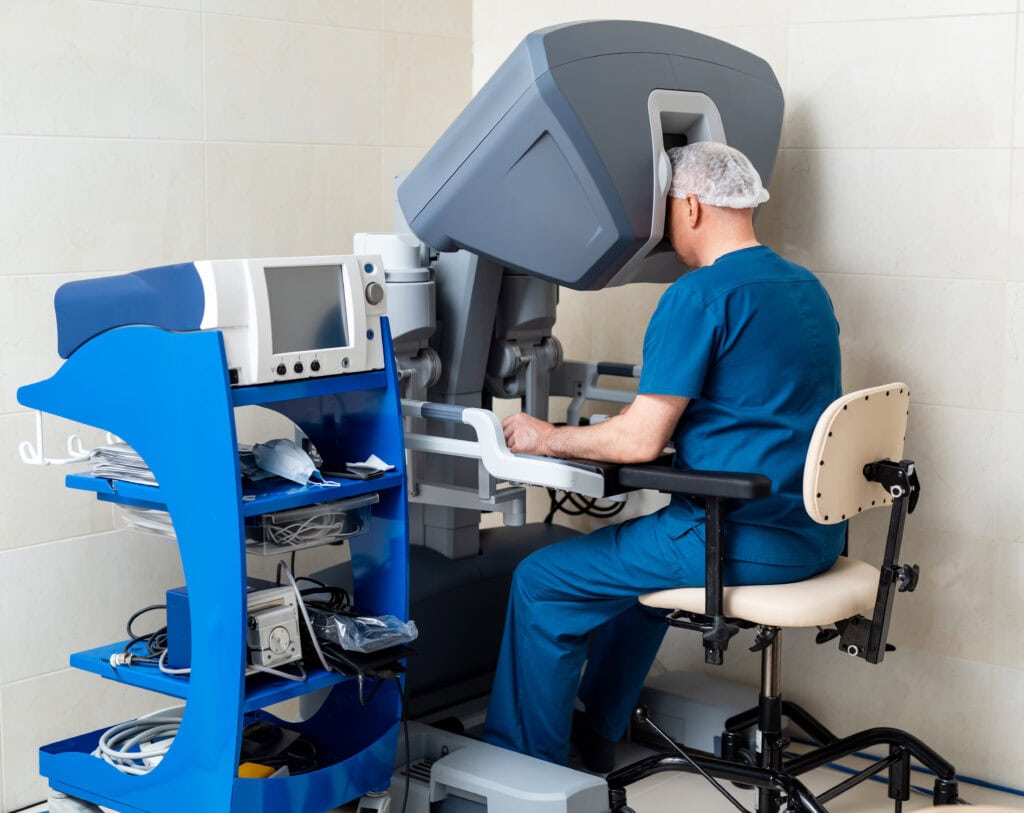
Robotic systems are transforming healthcare, from surgical and interventional platforms to automated assembly, pharmacy operations, and patient-assistive technologies. In all these systems, materials selection directly affects mechanical reliability, sterilization compatibility, biocompatibility, and overall regulatory strategy. Early materials input helps minimize risk and accelerate design verification.
Key Material Considerations
Selecting materials for medical and surgical robotics requires attention to:
- Biocompatibility: Evaluate cytotoxicity, sensitization, and irritation where surfaces contact patients, tissues, or fluids. Consider contact type (surface, external communicating, or implanted), duration, and supporting data required for risk management.
- Cleaning and sterilization: Assess how steam, ethylene oxide (EO), radiation, or low‑temperature processes affect mechanical properties, color, and dimensional stability over multiple cycles. Verify chemical resistance to disinfectants, detergents, and drugs to prevent stress cracking or surface degradation. Design considerations to facilitate cleaning and sterilization.
- Wear and fatigue: Quantify particulate generation and frictional wear in joints, seals, and actuators. Account for motion profiles, loads, and counterface materials that can impact precision and noise during robotic operation.
Common Polymers in Medical Robotics
Common polymers and elastomers used in medical robotics include PC, ABS, nylon, acetal, PU, silicone elastomers, PEEK, PPSU, and PTFE, but the appropriate selection is based on requirements for sterilization, cleaning, and application loads. High‑performance materials like PEEK and PPSU are preferred for reusable robotic instruments due to their superior sterilization durability, while commodity polymers and elastomers remain valuable for housings, disposables, and flexible elements when properly validated for their specific service conditions.
Below is a quick reference table mapping common polymers used in medical robotics to their typical failure risks and best-use cases. This format is intended for design reviews or standards discussions:
| Polymer | Common Failure Risks | Best-Use Cases in Medical Robotics |
|---|---|---|
| Polycarbonate (PC) | Environmental stress cracking (ESC) with cleaning agents; embrittlement under repeated sterilization | Transparent housings, protective covers, components requiring impact resistance but limited sterilization cycles |
| ABS (Acrylonitrile Butadiene Styrene) | ESC from disinfectants; poor long-term fatigue; dimensional instability under heat | Lightweight housings, non-load-bearing casings, disposable components |
| Nylon (Polyamide) | Creep under sustained load; moisture absorption leading to dimensional changes | Bearings, bushings, gears in low-load applications; flexible tubing |
| Acetal (POM/Delrin) | Fatigue and creep under repetitive stress; chemical sensitivity to sterilants | Precision gears, bushings, and sliding components requiring low friction |
| Polyurethane (PU) | Hydrolysis in humid environments; embrittlement under sterilization; chemical attack | Flexible seals, tubing, coatings where elasticity is critical but sterilization cycles are limited |
| Silicone Elastomers | Swelling or loss of elasticity with disinfectants; thermal instability at high loads | Soft robotic actuators, seals, prosthetic interfaces, biocompatible flexible joints |
| PEEK (Polyetheretherketone) | High cost; processing challenges, but generally robust | Surgical tool housings, reusable components requiring sterilization resistance and dimensional stability |
| PPSU (Polyphenylsulfone) | Limited chemical resistance compared to PEEK; potential discoloration | Reusable surgical instruments, housings requiring repeated autoclave sterilization |
| PTFE (Teflon) | Cold flow (creep) under load; difficult bonding | Low-friction bearings, seals, catheter linings, insulation for wires |
Key Takeaways in Medical Device Robotics Materials
- ESC and sterilization degradation are the most common polymer failure modes in medical robotics.
- High-performance polymers (PEEK, PPSU) are increasingly favored for reusable surgical robots due to superior sterilization resistance.
- Commodity polymers (ABS, PC, Nylon) remain useful for housings and disposables but pose risks in long-term, high-stress applications.
- Elastomers (Silicone, PU) enable flexibility and soft robotics but require careful chemical compatibility testing.
How Cambridge Polymer Group Helps
Cambridge Polymer Group helps medical robotics teams by:
- Biocompatibility strategy and testing: Guidance and testing for material and component safety aligned with ISO 10993 and FDA expectations.
- Soft-solid and elastomer development: Custom formulation and testing for grips, seals, gaskets, and actuators tailored to mechanical and sterilization requirements.
- Sterilization and reprocessing compatibility studies: Evaluate performance changes after autoclave, EO, or radiation processes across multiple cycles.
- Chemical resistance and environmental aging: Assess cleaning, disinfection, and exposure durability using simulated use conditions.
- Comprehensive materials characterization and failure analysis: Full support for mechanical, tribological, and thermal properties—feeding into design verification and regulatory documentation.
By combining soft-solid expertise with advanced polymer and composite analysis, CPG helps developers reduce material risk, demonstrate compliance, and bring safe, durable, high-performance healthcare robotics to market.